I would like to introduce you to my new camera – The Ricoh GR IIIx. A compact, premium camera known for It’s sharp 40mm fixed lens. Designed for street and travel photography, it delivers exceptional image quality in a pocket camera that actually fits into a pocket – or discretely in my dinner plate-size hands.
I’ve been putting it through its paces over the last week in situations where having a full-size camera is either too bulky for the situation or too conspicuous. This is my first step outside the Nikon family of cameras and I can report having a lot of fun with it. I’m impressed with the performance, so far.
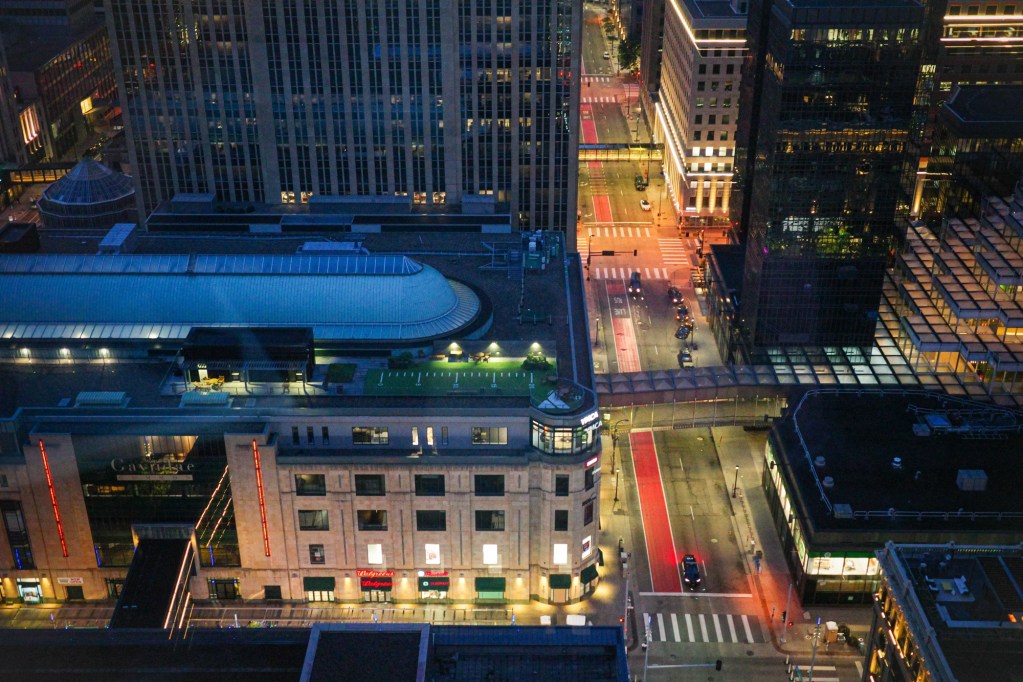
Nightscape – Downtown Minneapolis
Making it Yours
This camera is highly customizable. The user is able to tailor the camera to individual shooting styles, from street photography and quick travel snapshots to deliberate, composed landscapes and portraits. Multiple user modes allow instant recall of the pre-designed shooting settings, eliminating the frustration of fumbling through pages of settings while the subject has sauntered away from the scene. Also, people react differently to a (seemingly) simple pocket camera than to the sophisticated, serious looking full-size camera.
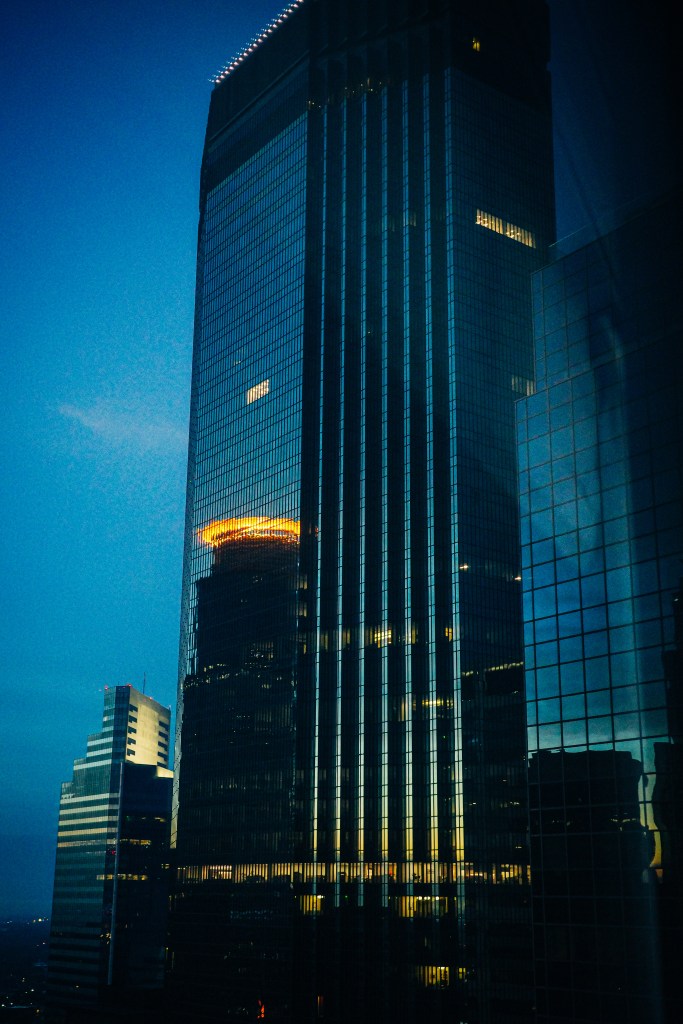
Morning Reflections – Downtown Minneapolis
Going Stealth Without Sacrificing Quality
The combination of discrete portability and shooting style personalization makes the RicohGR IIIx a great addition to my modest stable of cameras. I’ll keep you posted on how this new camera works out for my photography style.
Note
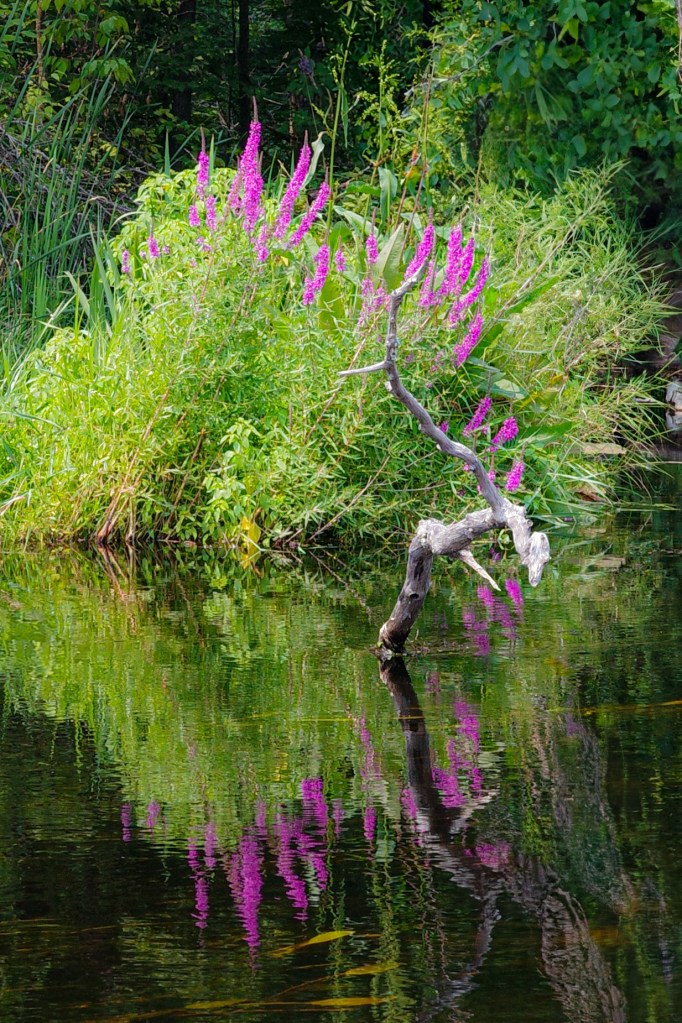
The image of Purple Loosestrife on the Yellow River in the previous post, The River that Whispers, was also captured with the Ricoh GR IIIx.
And as I anticipated, some folks on a Facebook group couldn’t reconcile the fact that something so vile and hated as the highly invasive Purple Loosestrife could, at the same time, be so beautiful. Oh well, I understand.
There are times when light bends over the river like a whisper. These moments, experienced in stillness, share the river’s secrets.
For some, four hours in a canoe can feel like four minutes or four days. On the Yellow River this week, time became fluid like swaying leaves, detached from endless circling hands. I drifted silently, the river’s current as my guide. The beautiful wooden paddle lay across my lap – the sound of dripping water disappearing into the melodic notes of the river.
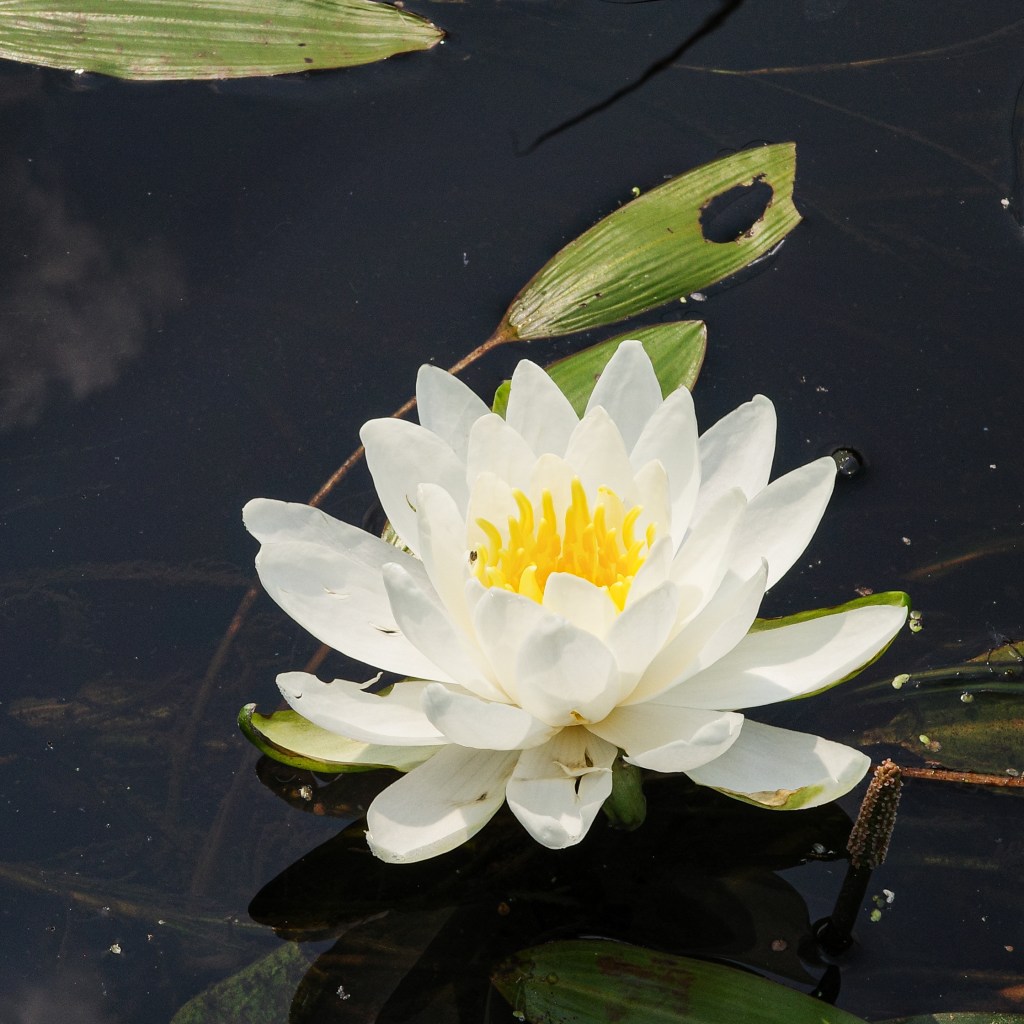
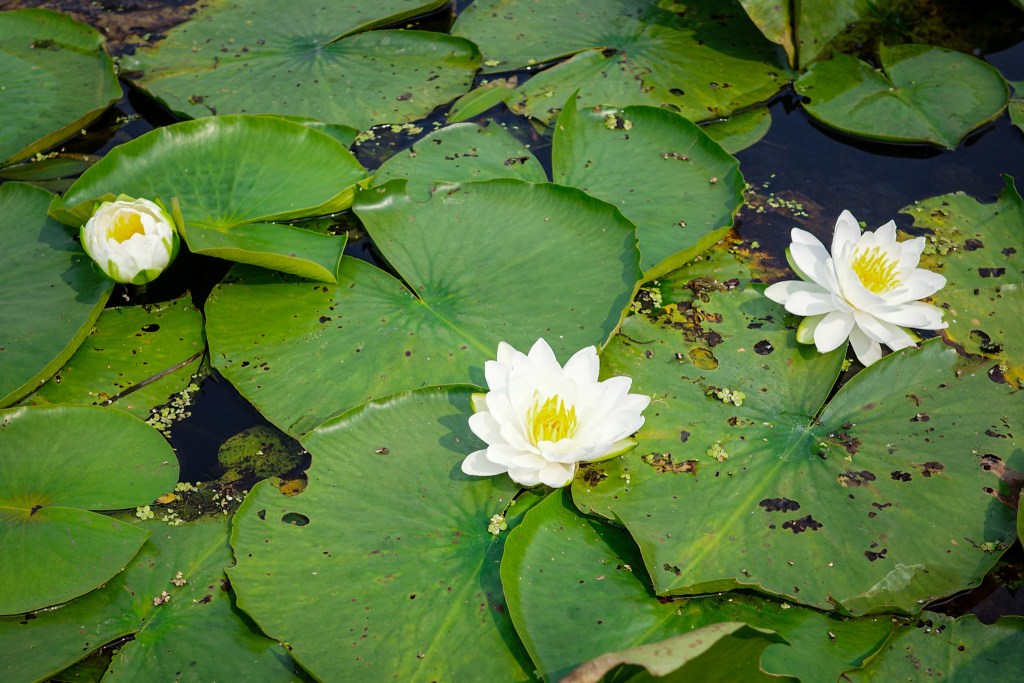
Along the way, I floated past clusters of white lilies standing just as proud as if they were the famous Lotus flower. Further ahead, tall spires of Purple Loosestrife arched high above the water from a small island of grasses. The river mirrored the bright purple. It extended the arc to a spectacular semicircle.
Water LilyPurple Loosestrife in the Yellow RiverWater lilies
The Whisper
There was a moment, one I return to now as I write this essay, when my interaction with the river changed. The light softened. I gazed into the moving water. Submerged grasses swayed like slow dancers beneath the surface. Shoreline cattails cast their shadows across the river, a shimmering dance partner to the grasses. I eased out the anchor. I stopped drifting. Stopped thinking.
Swaying Aquatic Plants and Shimmering Shadows of Cattails in the Yellow River
Transcendence
I idled there in the river, framed by tall grasses, cattails, and water lilies, desiring to soak in everything this moment held for me. I closed my eyes and opened myself to it.
I’ve come to understand these quiet moments as invitations. Nature has its own voice – often it is a whisper. One must be still to hear it. This little bend in the Yellow River felt like a chapel. The kind you stumble across in some strange land while traveling. Unsure if you can enter, only to discover you’ve been expected all along.
If you are quiet long enough, especially in nature, you can hear the world speak. And often, the most sacred places are just around the bend. Consider your own 5-mile radius project.
“The greatest journey is the one that leads us home—to the quiet rivers within.”
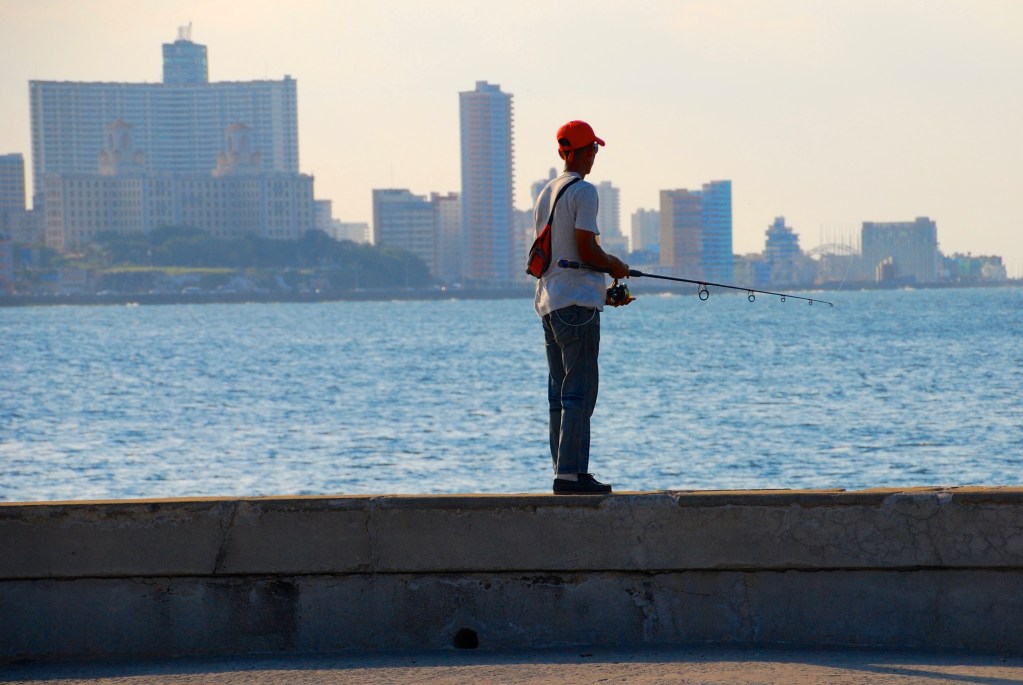
The seawall holds the weight of an ancient city. Protecting its inhabitants from the perils of the sea. Salt air mingles with the memory of centuries of struggle in the bright amber of late afternoon. Here at the edge of land and tide, a father and son crouch together, drawn not by the grandeur of the location, but by a shared focus on the present moment. The boy examines a recently caught fish, the father readies the hook for another try.
The boy is unaware of the perfect symmetry he has struck with his father. Unconscious of how we echo those we love. But the father knows. he feels it within himself. Offering no instruction or question – Only his presence.
Behind them, on the protective rampart of the Malecón, the father’s shadow is cast by the warm slanting light. It envelops his son in shared symmetry. The shadow is neither heavy nor oppressive. The boy’s own light still shines. A silhouette of inheritance.
It is in these instances of stillness, these singular moments in time, that we can glimpse something sacred. The way children dwell in the space we leave for them. A way of living passed down through posture, patience, and pause. Not every lesson has to be taught. Sometimes it can be found in the shadows.
More Images from the Malecón:
Fishing from the Malecón. Havana, CubaPort of Havana, Cuba
“In terms of beauty, only Venice and Paris surpassed Havana.”
– Ernest Hemingway
If you liked today’s post, you might enjoy this previous post.
A Celebration This portrait of a boy selling onions is one of my favorite images of all time. I ponder over it whenever I come across it. I’m posting it today as a celebration of the success of my website. So far,…
There is a solemn poetry to this place. A protected bay where the ocean can rest and catch its breath. Waves that roared for weeks from another continent now whisper at the pews of Pulpit Rock like a silent prayer.
Pulpit Rock, a silhouette of black, craggy, granite stands alone and weathered. The ethereal glow of dusk blends the ocean, mountains and sky into a spectrum of purples.
Soon, the mariner will strike his lite atop the mast – A single candle before the alter of a cathedral that rises from the sea. A prayer to Neptune and a splash of wine over the side as an offering. An evening with the Eternal.
60 miles east of Pattison State Park (previous post) is Copper Falls State Park. Both share geological origins of volcanic activity related to the Midcontinent Rift.
Copper Falls is an awe-inspiring retreat of cascading waterfalls, deep gorges, and old-growth forests. A scenic boardwalk trail winds through towering pines and offers beautiful views of the copper-hued falls and raucous rapids below.
The only thing to outshine these wonderful views is my beautiful partner, Jennifer! – featured in these photos.
Jennifer along the Bad River in Copper Falls State Park
Nestled in northwest Wisconsin, Pattison State Park is more than just a scenic overlook along highway 35. It is a living textbook of geological history. Here, roaring waterfalls, fern-covered forest floors, and delicate orchids flourish among billion-year-old rocks shaped by one of North America’s deepest scars: the Midcontinent Rift.
Geologic Origins: The Tectonic Rift
Over a billion years ago, tectonic forces began pulling the North American continent apart. This event, known as. the Midcontinent Rift , tore a gaping wound from what is now Kansas, arcing through Lake Superior and into Michigan. The rift did not fully split the continent. This was thanks to the orogeny event that created the Appalachian Mountains. However, it left behind dramatic layers of basalt, gabbro, and sedimentary rock.
Pattison State Park sits on this ancient seam. Volcanic activity, faulting, and erosion combined to create a rugged dramatic landscape. This landscape displays billions of years of geologic history right on the surface. Visitors can experience this firsthand.
The Douglas Fault
Imaging being able to walk along a visible fault line! The Douglas Fault runs right through the park. It is a major structural line. It juxtaposes dark, volcanic basalt to the south. Light sedimentary layers lie to the north. One can stand at the bottom of the gorge below Big Manitou Falls. There is a rugged basaltic wall on one side. Sandstone cliffs can be seen on the other. Over eons, erosion and glacial forces carved through this fault line. These forces allowed the black river to drop dramatically in elevation. This drop created the park’s signature waterfalls.
The Waterfalls
Big Manitou Falls is the tallest waterfall in Wisconsin at 165 Feet. The Black River plunges over hard basalt, a relic of ancient lava flows. It is located just downstream from Interfalls Lake. The lake is visible on the east side of highway 35 as it runs through the park.
Big Manitou Falls
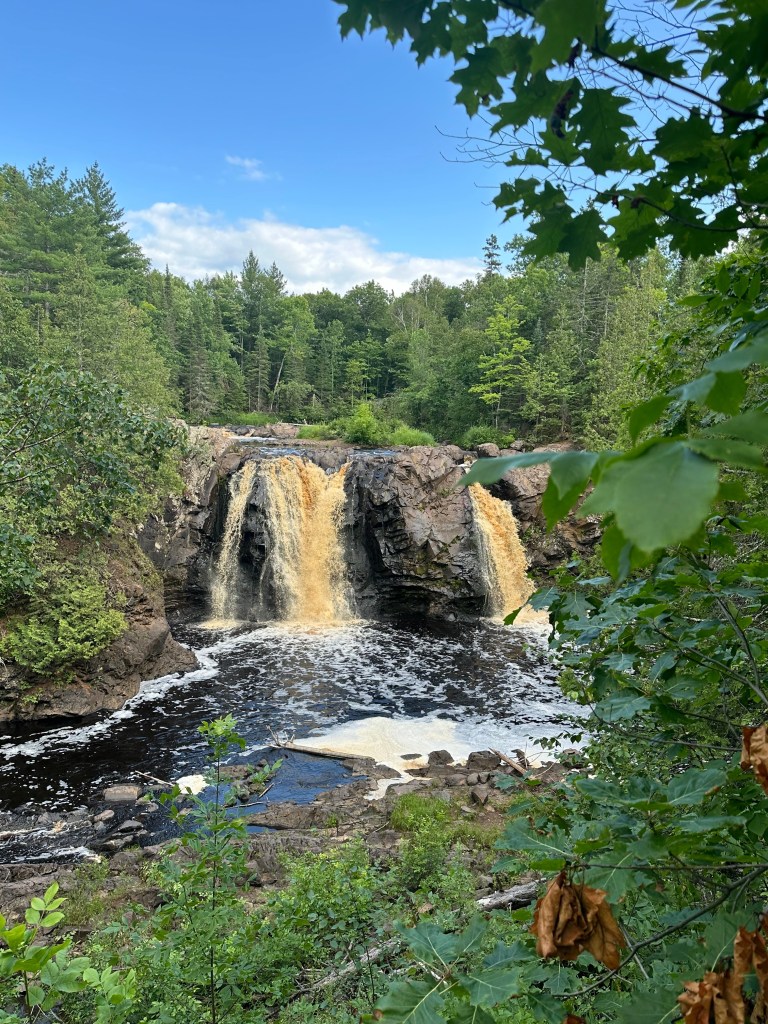
Little Manitou Falls is located further upstream from Interfalls Lake. There is a beautiful trail that stretches between the park and Little Manitou Falls. It follows along the banks of the Black River where the rapids and riffles are more accessible. At the falls, tannin-rich water, stained from forest detritus, flows over the same resistant basalt bedrock like root beer into a glass mug.
Little Manitou Falls in Pattison State Park, Wisconsin
These falls are geologically significant as they provide a stunning view of lava flows from volcanic eruptions that occurred 1.1 billion years ago and lasted for approximately 15-22 million years. Just take a moment to think about that.
The Biodiversity of Pattison State Park
Beyond its amazing geology, Pattison also has a rich forest ecology. The park is home to rare and delicate Lady’s slipper orchids. They thrive in the acid-rich soil left behind by glacial melt and basalt weathering.
Lady Slippers
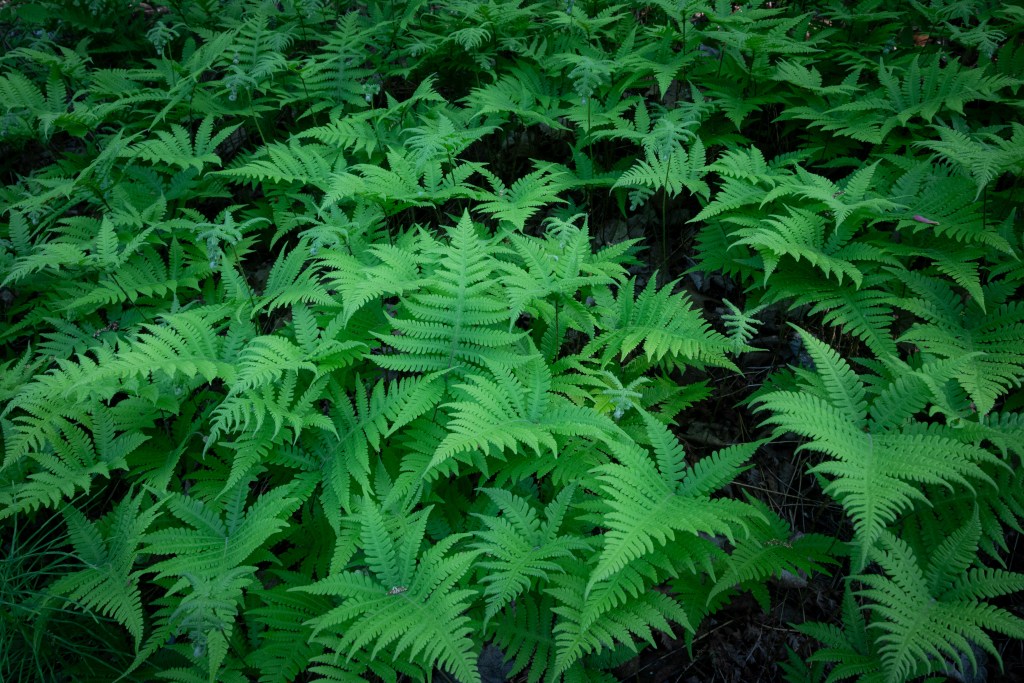
Ferns blanket the forest floor in vibrant greens, shaded by the microclimate of the Black River valley.
A mosaic of ferns at Pattinson State Park
Wetlands and marshes, formed by glacial depressions and spring-fed streams provide habitat for many types of wildlife.
The Black River as it opens to Interfalls Lake within the park
A Living Classroom
Visitors to Pattison walk through deep time – over past lava flows, ancient sea floors, fault lines, and glacial paths. Whether hiking the trails, photographing the flora, or sitting on a bench and listening to the sound of waterfalls echoing off volcanic cliffs, one can experience what this part of our earth looked like before it was covered and forever changed by glacial ice.
Bring your camera, hiking shoes, curiosity and imagination. You will need them all as you discover the secrets hidden at Pattison State Park.
If you enjoyed this post, and if you appreciate my efforts to provide quality images and informative articles, please consider supporting this blog by clicking on the subscribe button. It would mean a lot to me! Thank you very much!
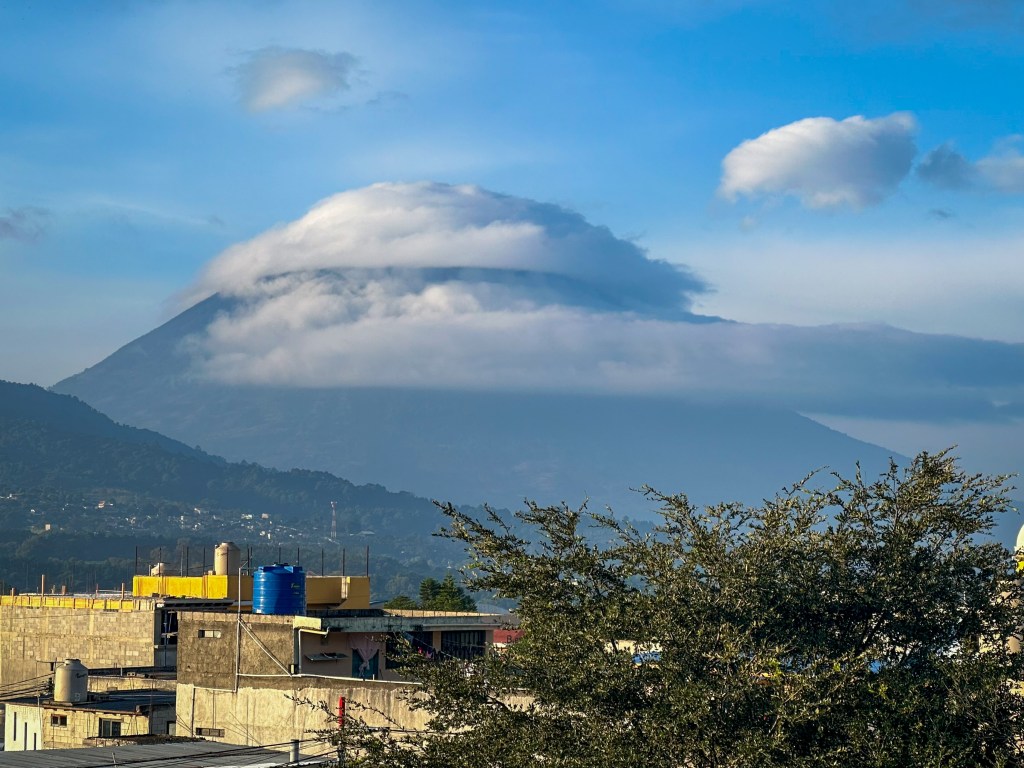
Antigua, Guatemala, is a charming colonial city with cobblestone streets and historic architecture, coffee shops and jewelry stores. It is situated, perhaps precariously, in a valley surrounded by three towering, stratovolcano peaks. Volcán de Agua (Volcano of Water), Volcán de Fuego (Volcano of Fire), and Volcán de Acatenango (The Watchtower), shape both the landscape and the lives of the people who live in their shadow.
The Photos in this post were taken during my recent trip to the region with the Minnesota/Wisconsin Lions eyeglass missions. We worked and stayed in the quaint pueblo of Santa Lucia Milpas Altas. It is located in the Sacatepequez district of Guatemala, just a short drive from La Antigua. In fact, most of these photos were taken from the rooftop of our hotel.
Volcán de Agua – A Sleeping Giant
Volcán de Agua is the most prominent peak in the skyline, rising 12,336ft. On the day of this photo, it displayed its ability to create its own weather. It wore a crown of lenticular clouds. This was an ethereal sight that made it seem both majestic and massive. Though dormant, this volcano has a tragic past. In 1541, heavy rains caused the crater lake to swell and collapse. This triggered a massive mudflow that destroyed the original capital of Guatemala.
Volcán de Fuego – Fire in the Sky
Volcán de Fuego shooting flames of lava into the evening sky.
Volcán de Fuego certainly lives up to its name. At 12,346ft (3,763 meters), it is one of Central America’s most active volcanoes. It erupts nearly every day, sending ash plumes high into the sky and lava flowing down its flanks. When it’s dark, one can often see flames shooting from the crater into the night sky, lighting the smoke and clouds with an orange glow. I was fortunate enough to capture such an eruption from El Fuego.
Fuego’s activity is a constant reminder of nature’s power. Its most devastating recent eruption was in June 2018. Pyroclastic flows devastated nearby communities and claimed hundreds of lives. Despite the danger, the locals live with it, both in awe and fear.
Volcán de Acatenango – The Watchtower
Towering next to Fuego is Volcán de Acatenango at 13,045ft (3,976meters). It’s geologically paired with Fuego. They are connected at the base and considered part of the same volcanic system. Acatenango offers one of the most rewarding (and demanding) hikes in Guatemala. Ambitious hikers make the overnight trek up this volcano. They seek the awe-inspiring sunrise views. There’s also a chance to spy the Pacific Ocean to the west. But the biggest thrill is a chance to witness Fuego’s fiery displays from a safe distance.
Acatenango has been dormant since 1970, but the cone still bears the scars of an explosive past. Now it seems the torch was passed to its twin, El Fuego.
Smoke, Ash, and Grace: Life Beneath the Volcanoes of Antigua
In the soft morning light over Antigua and surrounding villages, the volcanoes stand like ancient sentinels. Fuego smolders ominously in the distance. Acatenango rises with quiet majesty. Agua is draped in cloudy mist. Here, life clings to steep hillsides and blackened earth. Danger is not a distant concept. It is a neighbor – unpredictable, sometimes violent, always present.
Yet the people stay. Not because they must. They stay for connections to the land, their families and ancestors. And for a rhythm of life stronger than fear. They plant corn in ash-rich soil and grow coffee on the steep slopes of the volcanoes. They live with a grace that humbles the visitor. This is not just survival, it’s a pact with the mountains; a dance between reverence and risk.
BREAKING NEWS
I wrote the first draft of this post on Friday morning. Later that day, I received notice that Volcán El Fuego had a massive eruption starting on June 4th. A number of nearby villages were evacuated. Here is a video capturing the event.
“Clocks slay time… time is dead as long as it is being clicked off by little wheels; only when the clock stops does time come to life.” – William Faulkner, The Sound and the Fury
King Road
Coffee in one hand, I abruptly turned off the county highway with the other. A road sign I’d never noticed before – King Rd. It was a 90 degree turn off of the busy county highway. A forgotten ribbon of worn out asphalt that disappeared into the countryside, barely wide enough for two cars to pass. Spring grasses already encroaching over the non-existent berm. No structure in site. I had no reason to turn, and every reason not to. But I did. I couldn’t resist the contrast between such a lofty named road pointing down such a humble path.
My children used to call these sudden detours, Big Daddy Short Cuts, a name both affectionate and exasperated. They knew the moment we suddenly veered off the logical route, our planned journey, as well as the ETA, just exited the window along with their father’s regard for time. It never bothered me. These wild-haired excursions almost always paid off with interest and excitement.
The King of King Road
Not even a mile in, I saw him.
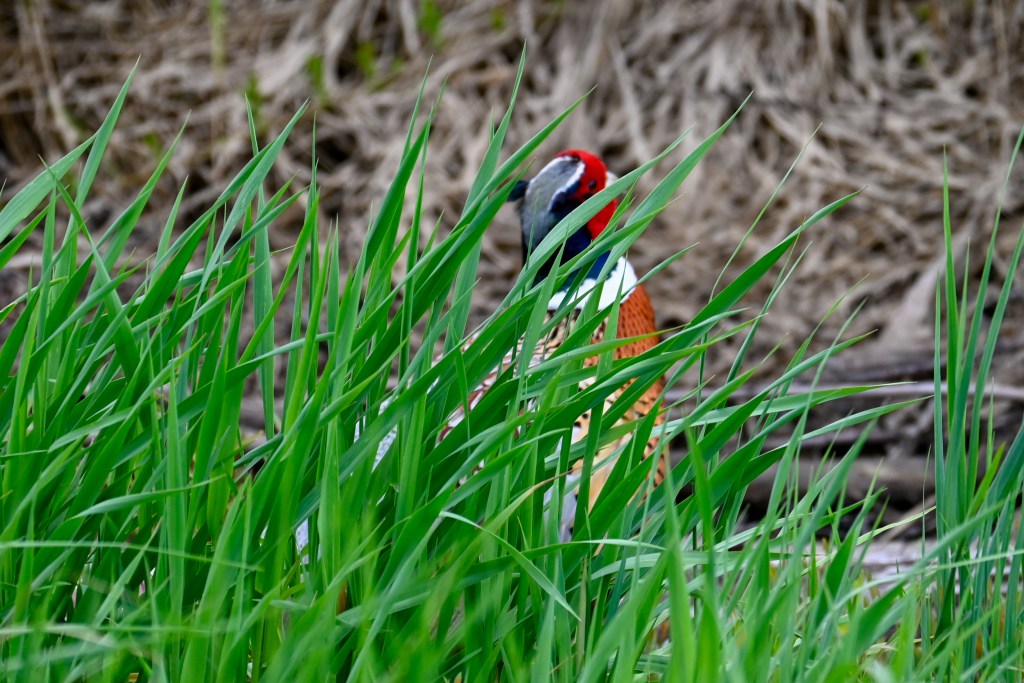
A Pheasant in tall grass
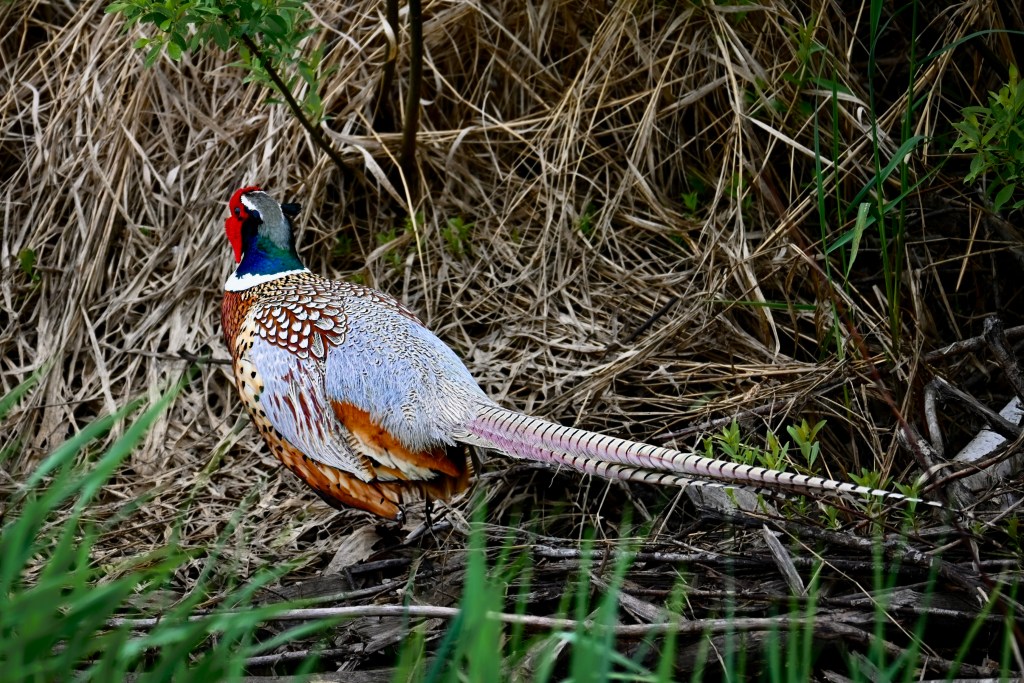
At first, just the brilliant red crown and bronze breast plate above the grass. I stopped, quietly, and reached for my camera. Adjusted the settings. And waited. The Ring-necked Pheasant – bold, deliberated – as if I posed no threat to his royal highness, stepped out into the open like he ruled the ditch, the fields, and the road beyond. His feathered robe and train shimmered with every color of the morning sun. He paused for a moment, giving me permission to admire his brilliance.
I pressed the shutter.
And for that moment, time stopped. The little wheels stopped clicking. Not frozen, but alive – breathing, waiting, witnessing, sharing.
Big Daddy Short Cuts
This is why I take my short cuts. This is why I believe life is more important than time. It is the things not scheduled or promised or even deserved that is discovered when we yield to the out-of-place road sign that leans a little in the wind. Because somewhere out there is something amazing I wouldn’t have experienced if I’d kept to the fast lane. Something wild, something regal.
The first lights of evening were not the fireflies. They were Venus and Jupiter hanging above the western horizon. The fireflies came later, rising from…
Field Notes: As evening faded, frogs and birds began their evening chorus. Perched nearby, a Common Yellowthroat emerged as the lead singer. And one of…
A red banner on the weather app declares, “Winter Storm Warning.” Outside, blowing snow confirms the alarming forecast. Five to nine inches of snow and…
The arrival of the Yellow Warbler is a welcome sight in Wisconsin. It’s a sure sign spring is officially here and summer is soon to follow.
Migration of the Yellow Warbler to Wisconsin
Like many of our residents, the Yellow Warblers migrate to warmer climates during the winter. Our Yellow Warblers particularly like Central and South America where their plumage matches the tropical sunsets.
In late April and early May they make their way back north to favorite marshes and thickets, bringing the color of tropical sunsets with them.
Identifying the Yellow Warbler
I identify them while walking along the glacial wetlands and kettle lakes near my home in northwest Wisconsin. usually one first hears the, “sweet, sweet, sweet. I’m so sweet” of their cheerful song. Then watch for the flash of a golden tropical sunset as they flitter from perch to perch searching for insects.