

Pattison State Park
Nestled in northwest Wisconsin, Pattison State Park is more than just a scenic overlook along highway 35. It is a living textbook of geological history. Here, roaring waterfalls, fern-covered forest floors, and delicate orchids flourish among billion-year-old rocks shaped by one of North America’s deepest scars: the Midcontinent Rift.
Geologic Origins: The Tectonic Rift
Over a billion years ago, tectonic forces began pulling the North American continent apart. This event, known as. the Midcontinent Rift , tore a gaping wound from what is now Kansas, arcing through Lake Superior and into Michigan. The rift did not fully split the continent. This was thanks to the orogeny event that created the Appalachian Mountains. However, it left behind dramatic layers of basalt, gabbro, and sedimentary rock.
Pattison State Park sits on this ancient seam. Volcanic activity, faulting, and erosion combined to create a rugged dramatic landscape. This landscape displays billions of years of geologic history right on the surface. Visitors can experience this firsthand.
The Douglas Fault
Imaging being able to walk along a visible fault line! The Douglas Fault runs right through the park. It is a major structural line. It juxtaposes dark, volcanic basalt to the south. Light sedimentary layers lie to the north. One can stand at the bottom of the gorge below Big Manitou Falls. There is a rugged basaltic wall on one side. Sandstone cliffs can be seen on the other. Over eons, erosion and glacial forces carved through this fault line. These forces allowed the black river to drop dramatically in elevation. This drop created the park’s signature waterfalls.
The Waterfalls
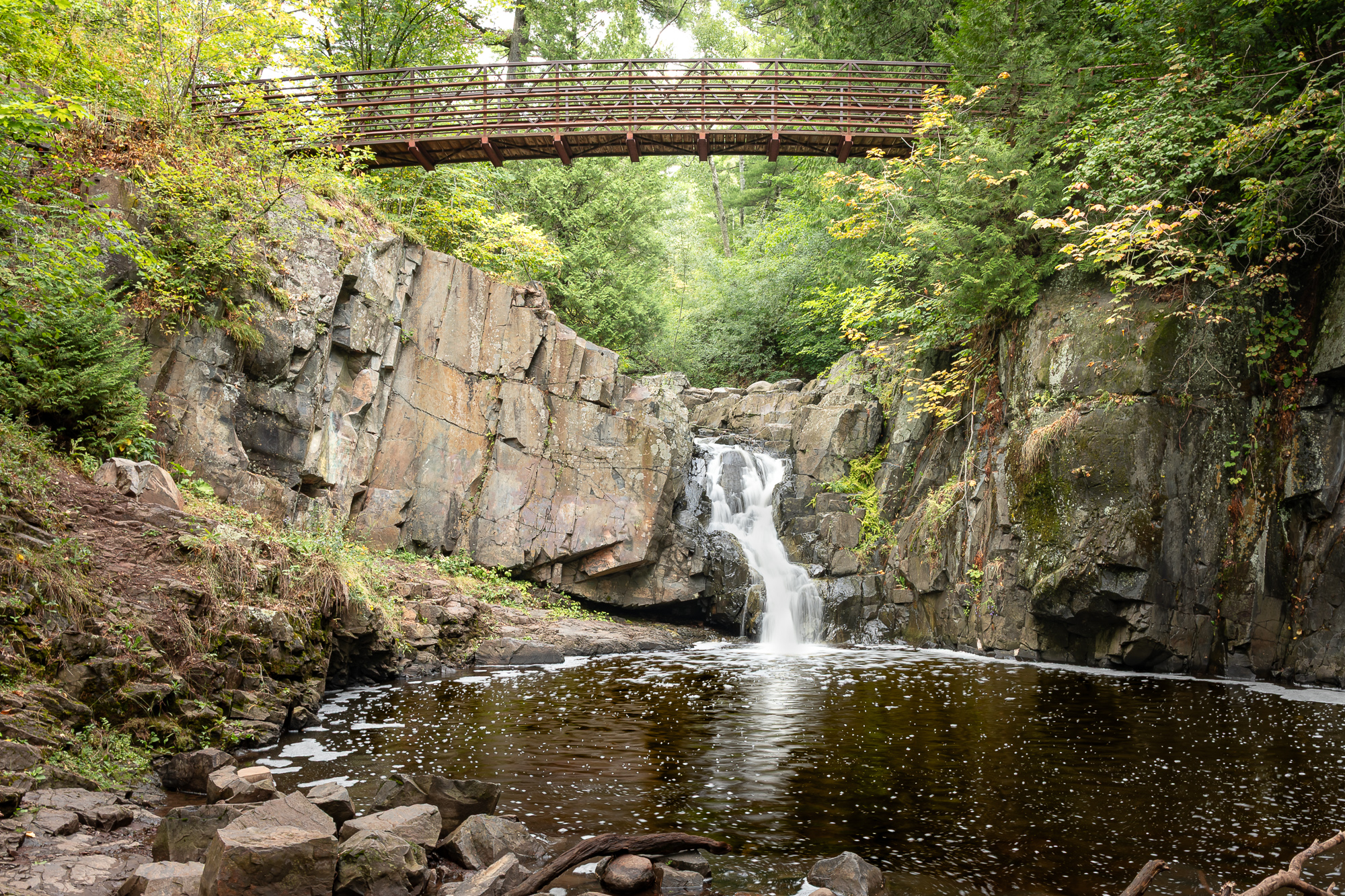
Big Manitou Falls is the tallest waterfall in Wisconsin at 165 Feet. The Black River plunges over hard basalt, a relic of ancient lava flows. It is located just downstream from Interfalls Lake. The lake is visible on the east side of highway 35 as it runs through the park.
Little Manitou Falls is located further upstream from Interfalls Lake. There is a beautiful trail that stretches between the park and Little Manitou Falls. It follows along the banks of the Black River where the rapids and riffles are more accessible. At the falls, tannin-rich water, stained from forest detritus, flows over the same resistant basalt bedrock like root beer into a glass mug.
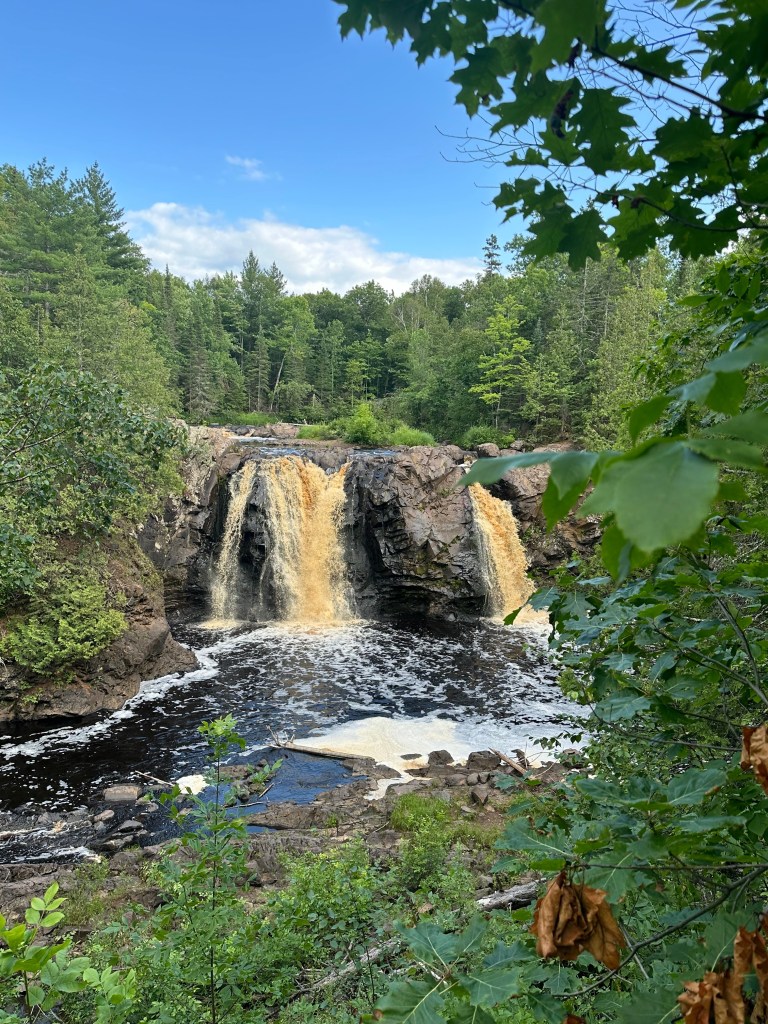
These falls are geologically significant as they provide a stunning view of lava flows from volcanic eruptions that occurred 1.1 billion years ago and lasted for approximately 15-22 million years. Just take a moment to think about that.
The Biodiversity of Pattison State Park
Beyond its amazing geology, Pattison also has a rich forest ecology. The park is home to rare and delicate Lady’s slipper orchids. They thrive in the acid-rich soil left behind by glacial melt and basalt weathering.

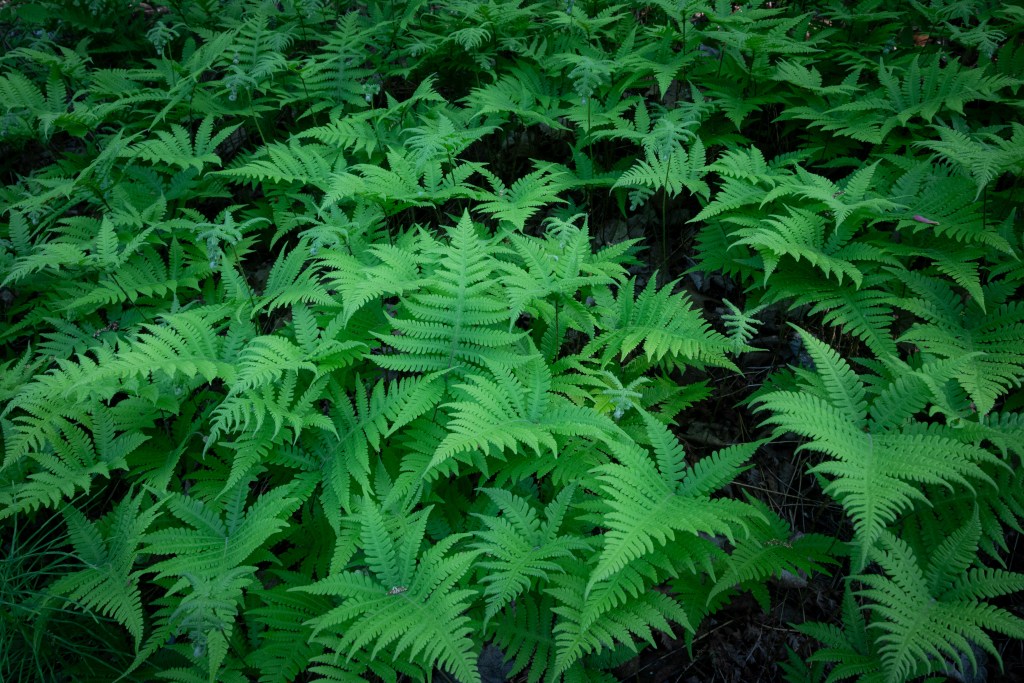
Ferns blanket the forest floor in vibrant greens, shaded by the microclimate of the Black River valley.
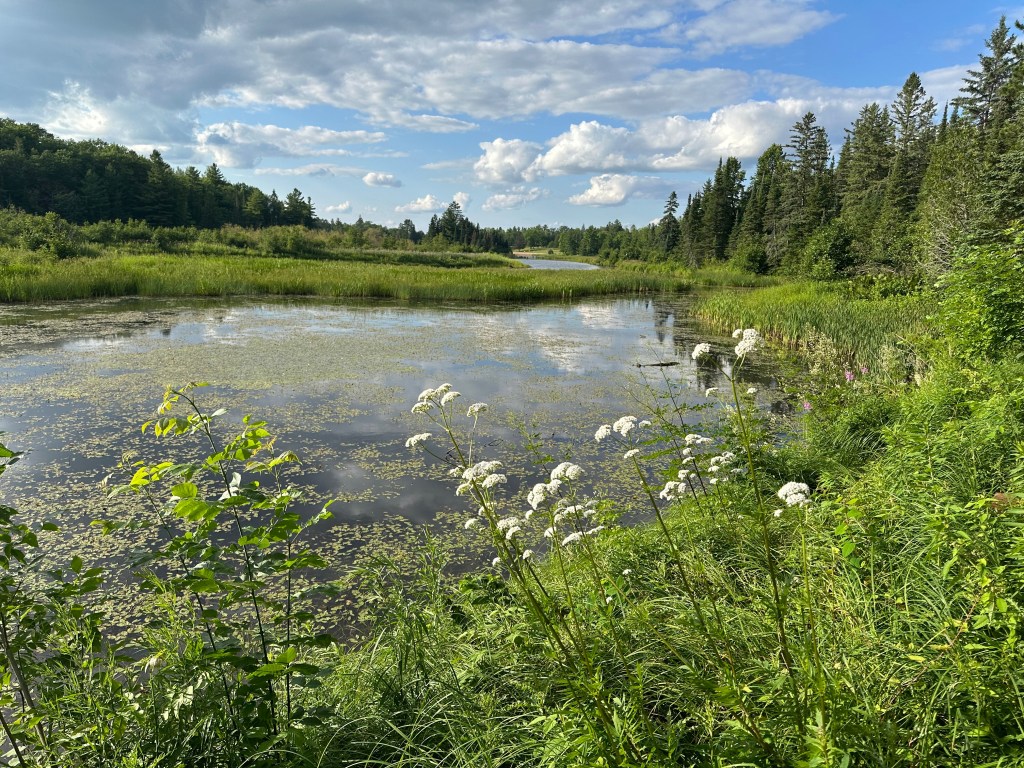
Wetlands and marshes, formed by glacial depressions and spring-fed streams provide habitat for many types of wildlife.
A Living Classroom
Visitors to Pattison walk through deep time – over past lava flows, ancient sea floors, fault lines, and glacial paths. Whether hiking the trails, photographing the flora, or sitting on a bench and listening to the sound of waterfalls echoing off volcanic cliffs, one can experience what this part of our earth looked like before it was covered and forever changed by glacial ice.
Bring your camera, hiking shoes, curiosity and imagination. You will need them all as you discover the secrets hidden at Pattison State Park.
To learn more about the park, go to: CLICK HERE
Media that is good for you!
If you enjoyed this post, and if you appreciate my efforts to provide quality images and informative articles, please consider supporting this blog by clicking on the subscribe button. It would mean a lot to me! Thank you very much!



This blog is a place for stories and conversations. Add your voice below – I'd love to hear it.