

Antigua, Guatemala, is a charming colonial city with cobblestone streets and historic architecture, coffee shops and jewelry stores. It is situated, perhaps precariously, in a valley surrounded by three towering, stratovolcano peaks. Volcán de Agua (Volcano of Water), Volcán de Fuego (Volcano of Fire), and Volcán de Acatenango (The Watchtower), shape both the landscape and the lives of the people who live in their shadow.
The Photos in this post were taken during my recent trip to the region with the Minnesota/Wisconsin Lions eyeglass missions. We worked and stayed in the quaint pueblo of Santa Lucia Milpas Altas. It is located in the Sacatepequez district of Guatemala, just a short drive from La Antigua. In fact, most of these photos were taken from the rooftop of our hotel.
Volcán de Agua – A Sleeping Giant
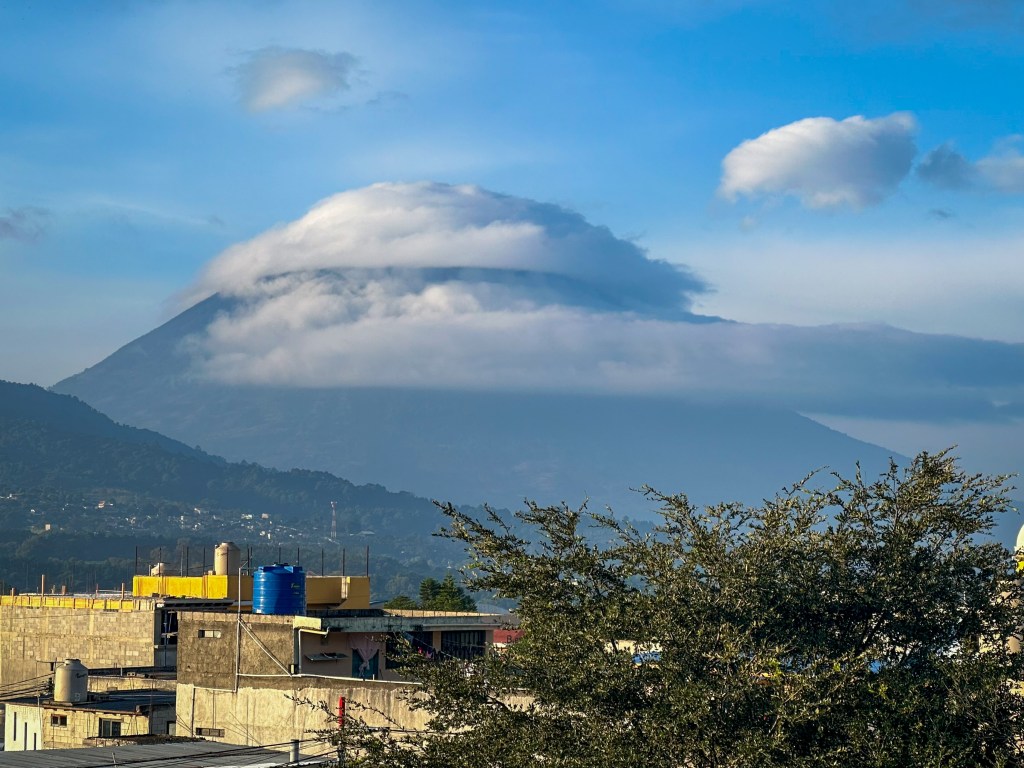
Volcán de Agua is the most prominent peak in the skyline, rising 12,336ft. On the day of this photo, it displayed its ability to create its own weather. It wore a crown of lenticular clouds. This was an ethereal sight that made it seem both majestic and massive. Though dormant, this volcano has a tragic past. In 1541, heavy rains caused the crater lake to swell and collapse. This triggered a massive mudflow that destroyed the original capital of Guatemala.
Volcán de Fuego – Fire in the Sky

Volcán de Fuego certainly lives up to its name. At 12,346ft (3,763 meters), it is one of Central America’s most active volcanoes. It erupts nearly every day, sending ash plumes high into the sky and lava flowing down its flanks. When it’s dark, one can often see flames shooting from the crater into the night sky, lighting the smoke and clouds with an orange glow. I was fortunate enough to capture such an eruption from El Fuego.
Fuego’s activity is a constant reminder of nature’s power. Its most devastating recent eruption was in June 2018. Pyroclastic flows devastated nearby communities and claimed hundreds of lives. Despite the danger, the locals live with it, both in awe and fear.
Volcán de Acatenango – The Watchtower

Towering next to Fuego is Volcán de Acatenango at 13,045ft (3,976meters). It’s geologically paired with Fuego. They are connected at the base and considered part of the same volcanic system. Acatenango offers one of the most rewarding (and demanding) hikes in Guatemala. Ambitious hikers make the overnight trek up this volcano. They seek the awe-inspiring sunrise views. There’s also a chance to spy the Pacific Ocean to the west. But the biggest thrill is a chance to witness Fuego’s fiery displays from a safe distance.
Acatenango has been dormant since 1970, but the cone still bears the scars of an explosive past. Now it seems the torch was passed to its twin, El Fuego.
Smoke, Ash, and Grace: Life Beneath the Volcanoes of Antigua
In the soft morning light over Antigua and surrounding villages, the volcanoes stand like ancient sentinels. Fuego smolders ominously in the distance. Acatenango rises with quiet majesty. Agua is draped in cloudy mist. Here, life clings to steep hillsides and blackened earth. Danger is not a distant concept. It is a neighbor – unpredictable, sometimes violent, always present.
Yet the people stay. Not because they must. They stay for connections to the land, their families and ancestors. And for a rhythm of life stronger than fear. They plant corn in ash-rich soil and grow coffee on the steep slopes of the volcanoes. They live with a grace that humbles the visitor. This is not just survival, it’s a pact with the mountains; a dance between reverence and risk.
BREAKING NEWS
I wrote the first draft of this post on Friday morning. Later that day, I received notice that Volcán El Fuego had a massive eruption starting on June 4th. A number of nearby villages were evacuated. Here is a video capturing the event.


This blog is a place for stories and conversations. Add your voice below – I'd love to hear it.