
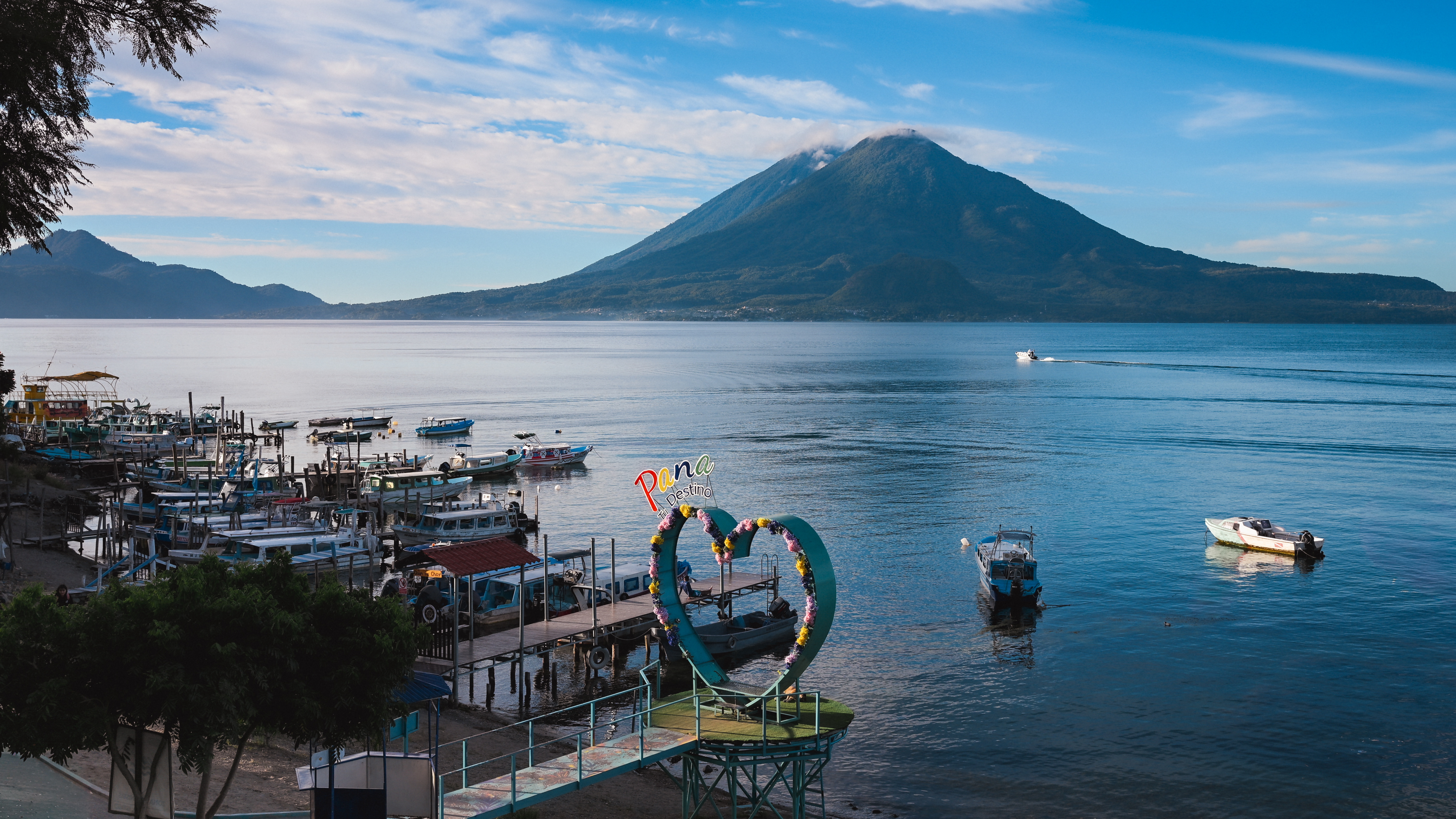
Lake Atitlán lies cradled in the Guatemalan highlands like a mirror held up to the sky. Clouds drift over its surface and float on the surrounding volcanoes. Three cones: San Pedro, Tolimán, and Atitlán, rise steeply from the water. Their forested slopes are etched by the ages and support a scattering of villages. The lake itself is an ancient super-volcanic caldera that filled with water over time. Even now there is a palpable sense of stillness here, as if the land is quietly aware of its eruptive creation.
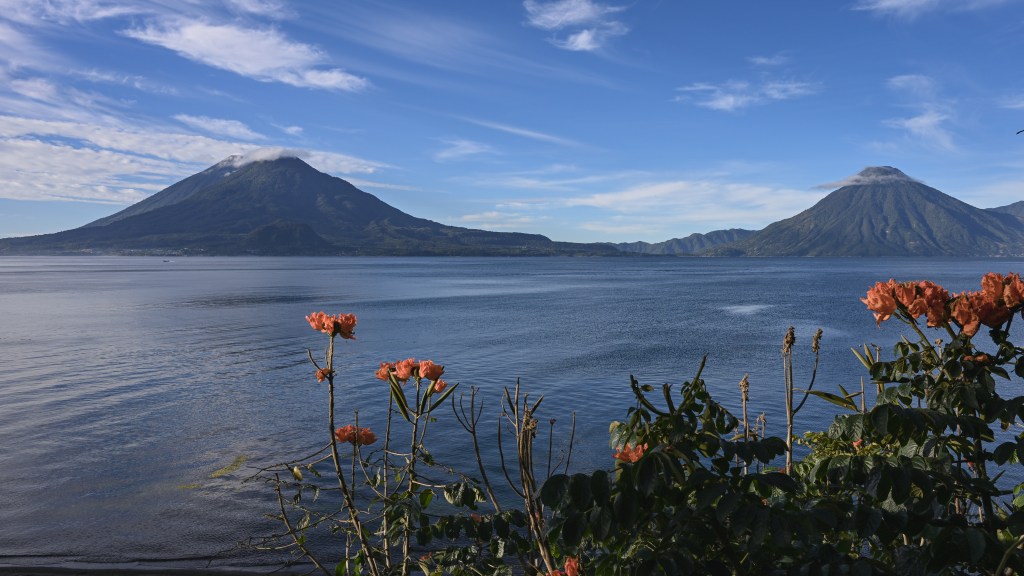
Getting around the lake
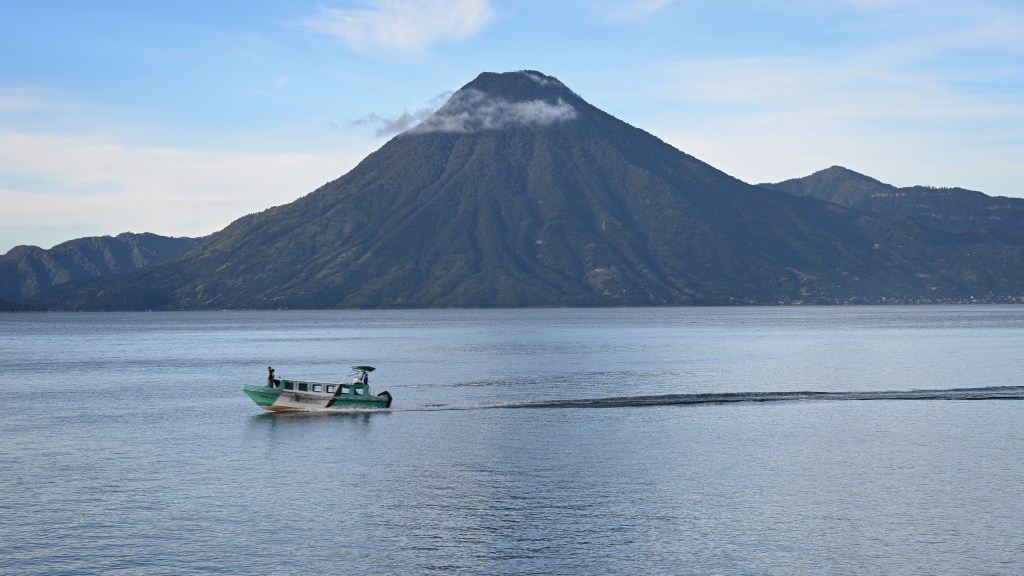
For the most part, life on the lake moves by boat. Long, narrow launches awaken with the sun. Their wakes drawing temporary lines across an otherwise unbroken calm. These boats connect lakeshore villages like Panajachel, San Juan La Laguna, and Santiago Atitlán. Each hillside town has its own rhythm, colors, and traditions.

San Juan La Laguna
At San Juan La Laguna, color becomes part of the landscape, and the attraction. Hanging umbrellas, artwork, and embroidered fabrics echo the colorfulness of the locals themselves. Markets, murals, and quiet rituals all speak to a community deeply rooted in Mayan culture.
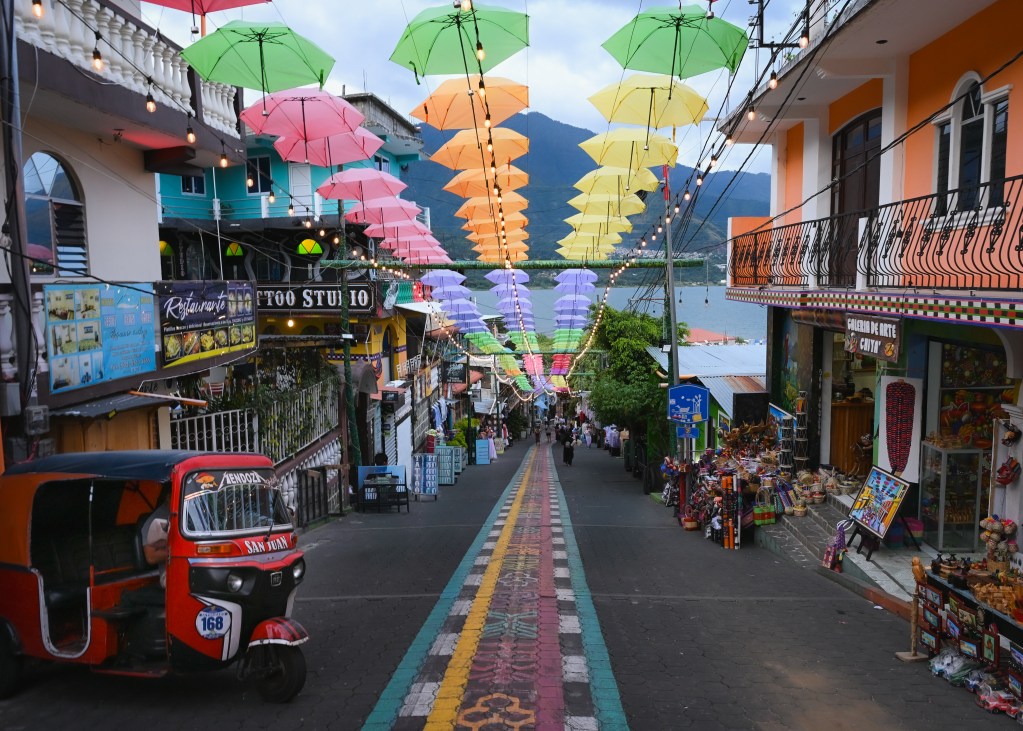
The magic of Lake Atitlán
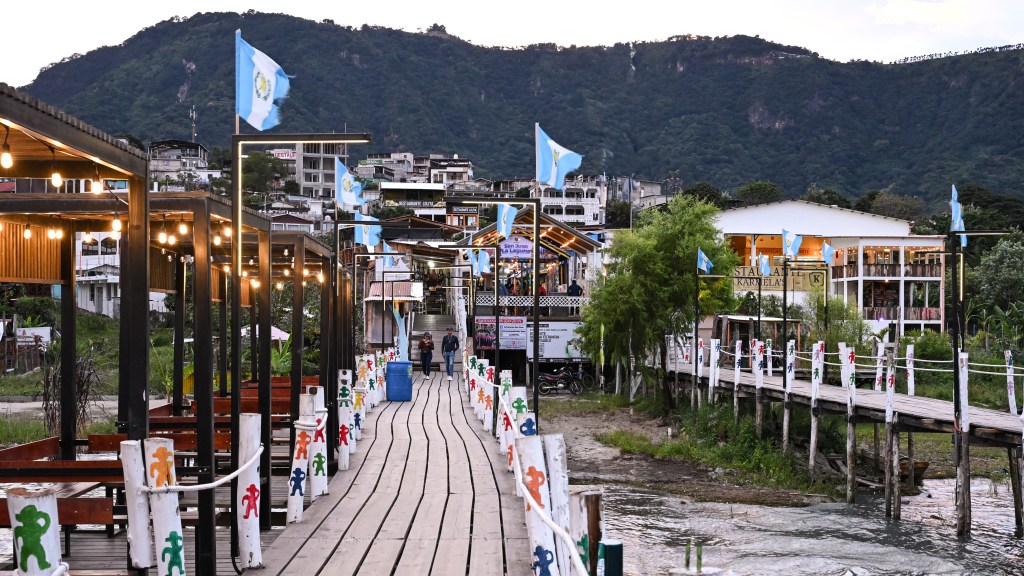
Lake Atitlán had been on my travel list for years – ever since reading articles and viewing images in various travel magazines. There’s something special about this place. Hidden below wild hills and majestic volcanoes, Atitlán has a quiet, mystical vibe. The history of this ancient crater drifts across the water like an evening mist. It encourages silent wonder. It asks us to slow down, stand on the end of a pier, and lose ourselves in a sunset that transcends the elements.

I invite you to read this related post from a previous trip to Guatemala.



This blog is a place for stories and conversations. Add your voice below – I'd love to hear it.