

Sandhill Crane Migration
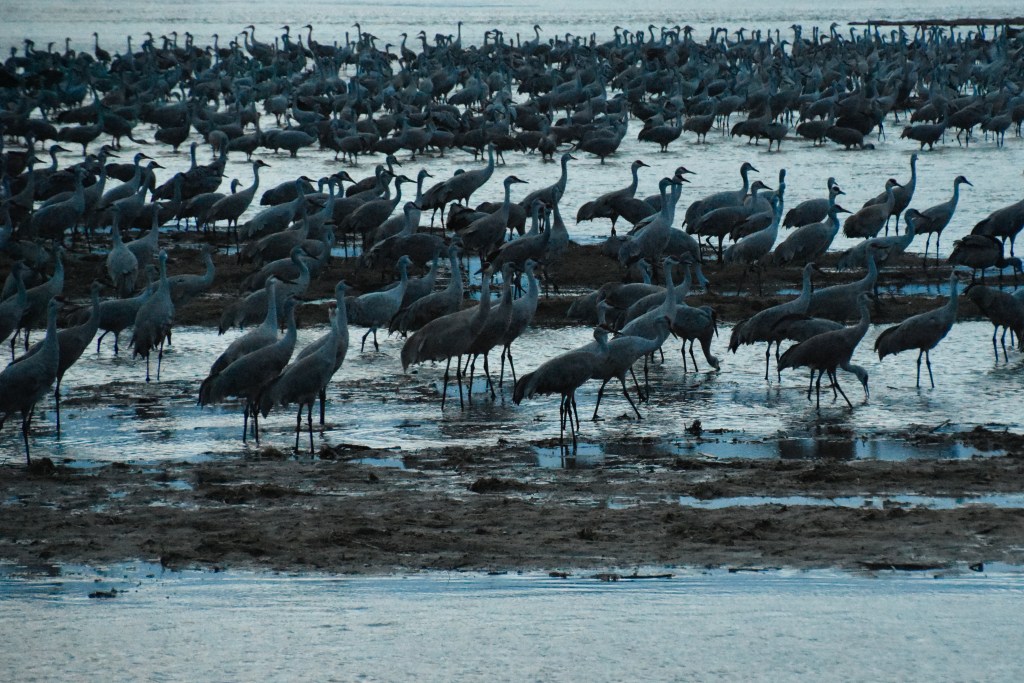
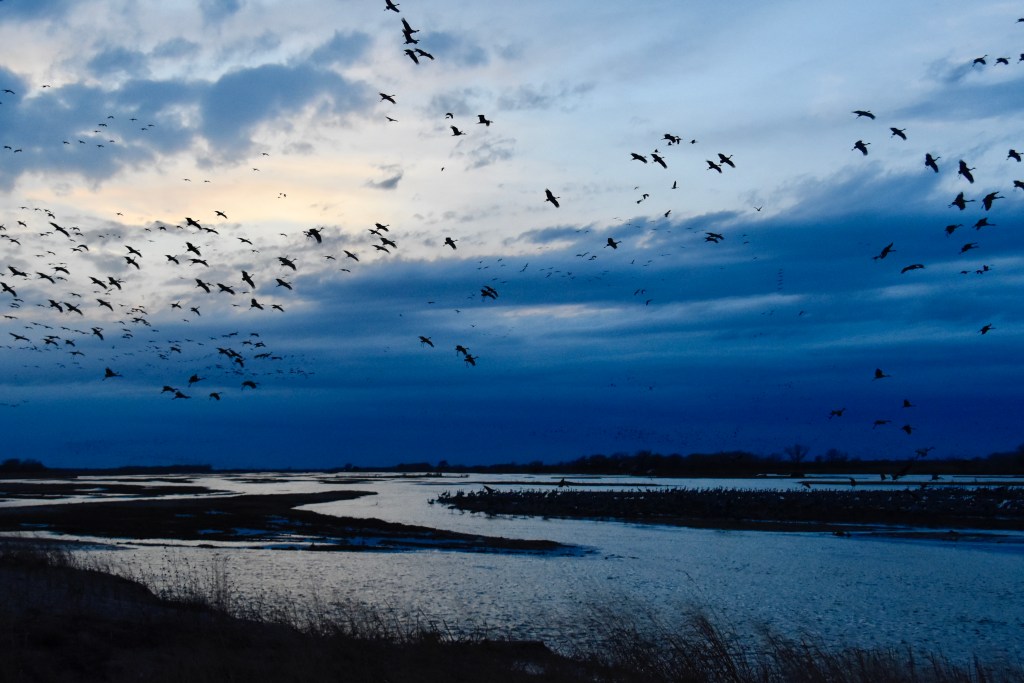
Every spring, a remarkable event occurs across the skies and riverbanks of Central Nebraska. It’s the Sandhill Crane migration. More than 500,000 of the large, elegant birds descend upon the Platte River Valley. This creates an awe-inspiring display of flight, motion, and sound.
This annual gathering of Sandhill Cranes is one of the largest crane migrations in the world. Birds stop here to rest and refuel on their journey north to breeding grounds in the U. S., Canada, and Siberia.
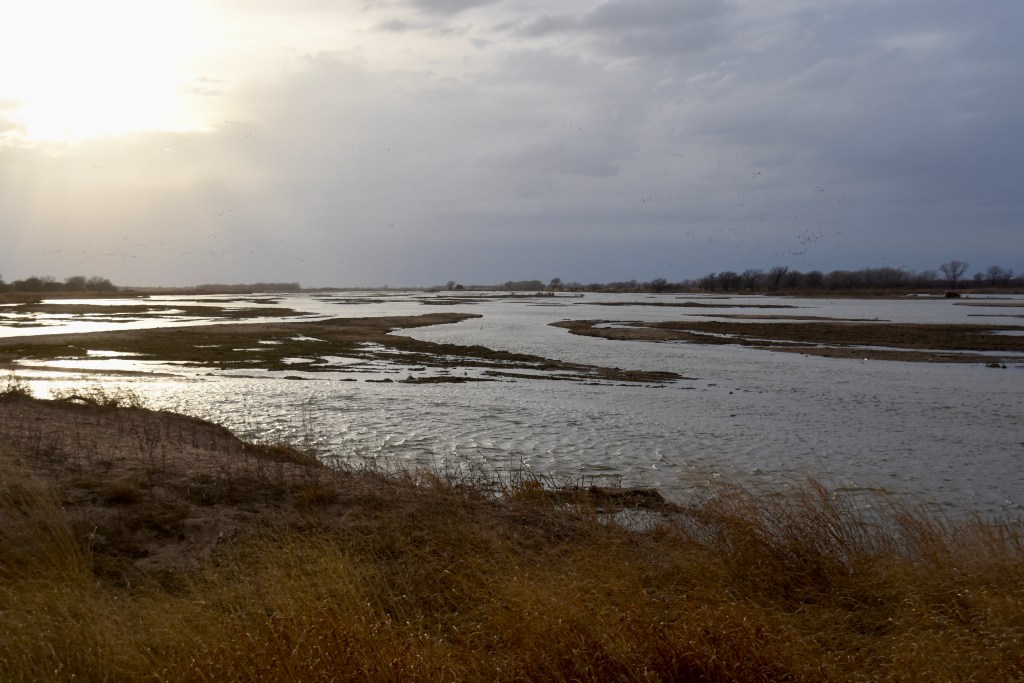
The Platte River of Central Nebraska
The shallow waters and wide open channels surround flat, sandbar islands in this section of the Platte River. This offers ideal conditions for cranes to roost safely at night. The neighboring cornfields contain a smorgasbord of leftover corn from the previous fall harvest. These fields provide a rich source of food during the day for the Sandhill Cranes. This is a much needed refueling for the next leg of their incredible migration.
A Migration for the Eons
Sandhill Cranes have been migrating across the North American continent for millions of years. Fossil records show that Cranes are among the oldest known bird species still in existence. They are flying dinosaurs!
Modern humans (Homo Sapiens) have been on the planet for approximately 300,000 years. Think about that for a minute! For Sandhill Cranes, interaction with humans during their annual migration is a relatively recent event. Fossil records of Sandhill Cranes have been found in Nebraska that are up to 10 million years old!
The Importance of the Audubon Society
The Audubon Society plays a vital role through its Rowe Sanctuary. This sanctuary is located in central Nebraska near the city of Kearney. It protects the habitat and ensures the long-term survival of the Sandhill Crane migration along the Platte River. This is achieved by managing thousands of acres of river and wetland habitat. They actively maintain the open channels and shallow waters that the Sandhill Cranes depend on.
In addition to habitat protection, the Audubon Society leads a robust public education and outreach program. The Society raises public awareness about the cranes and the importance of habitat conservation. Each year, The Audubon Society, hosts thousands of visitors from around the world for a guided Sandhill Crane migration experience. This helps spread the word about how important their efforts are in preserving this essential habitat for the crane migration.
Our Experience at the Audubon Society Rowe Sanctuary
Last March, Jennifer and I visited the Rowe Sanctuary in Nebraska. We had the opportunity to experience this incredible Sandhill Crane migration – one of the North American’s most epic natural events.
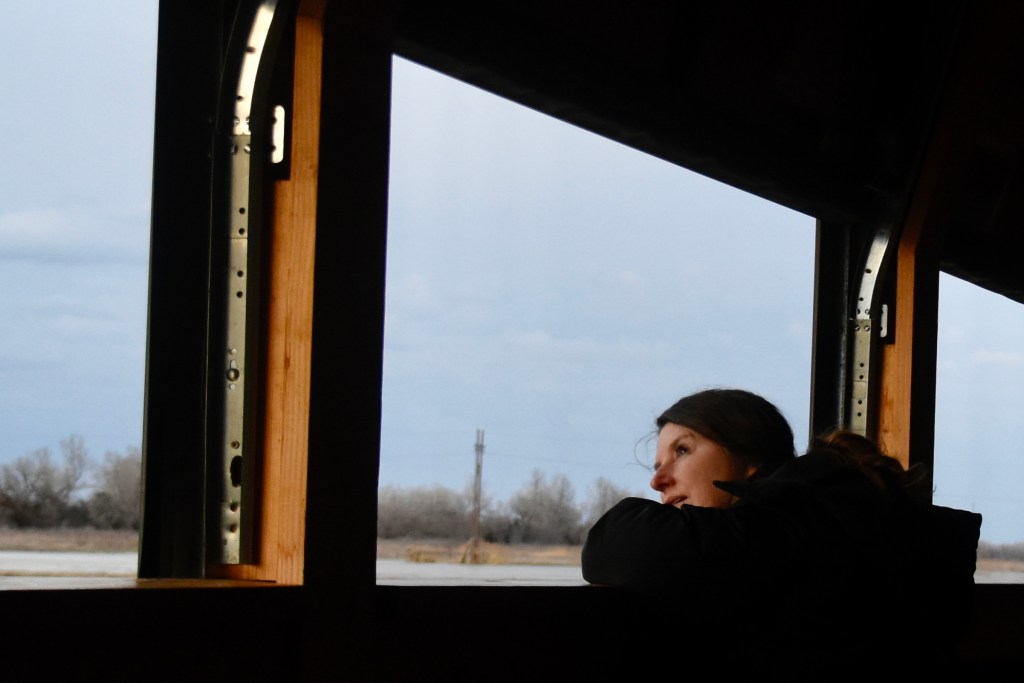
The Rowe Sanctuary offers guided tours. Visitors can view the spectacular concentration of Sandhill Cranes on their overnight river roosts. They offer a morning tour to view the cranes leaving the river at sunrise. They also offer an evening tour to view cranes returning to the river at sunset. We signed up for both tours! Viewing the cranes on their river roosts takes place in what the sanctuary calls, Discovery Centers. These centers are located riverside between 1/4 and 1/2 mile from the Visitor Center. Each center has a long viewing room and an attached warming room. Port-a-potty toilets are located nearby. Inside the discover center, there is plenty of bench seating, storage shelves for camera gear, coats, coffee mugs, backpacks, etc.
Advice
My advice is to follow our lead and book both the evening and morning tours ($60 per person per tour). They are two different experiences. The logistics are simple. Arrive the day before around hotel check-in time of 3pm. Have dinner somewhere. Then, travel to Rowe Sanctuary Visitor Center for a sunset tour. Get up very early next morning. Take coffee and a morning snack. Travel to the Sanctuary in the dark for the sunrise tour. Later, find a local restaurant for a hearty breakfast and reflect on what an awe-inspiring event you just witnessed!
Instead of searching for even more adjectives to describe the experience, I will leave you with my video:
Sound on, volume up!
Information
For more information about the Audubon Society’s Rowe
Sanctuary near Kearney, Nebraska – and much more information about the annual Sandhill Crane Migration, visit their website, HERE.


This blog is a place for stories and conversations. Add your voice below – I'd love to hear it.