A quick look at my Facebook page, Instagram feed, or the gallery on this website will show the vibrant colors in my photography. Most of my work lives in saturated color and strong contrasts. Often it feels like I see the world through a camera lens that has the image control set to vivid! Whether it’s the compliments on the color wheel or the soft golden glow of late-afternoon light, color influences how I interpret images. It shapes how I compose them.
Knowing this, I sometimes force myself to go color blind when looking at composition, which changes everything.
These six black and white photographs are selected from my travels. The stories are being told in form, light, shadows, and texture. Not bold, saturated colors. They offer a different, more contemplative way of seeing. We must process and interpret the delicate, subtle gradients of the in-between.
The Images
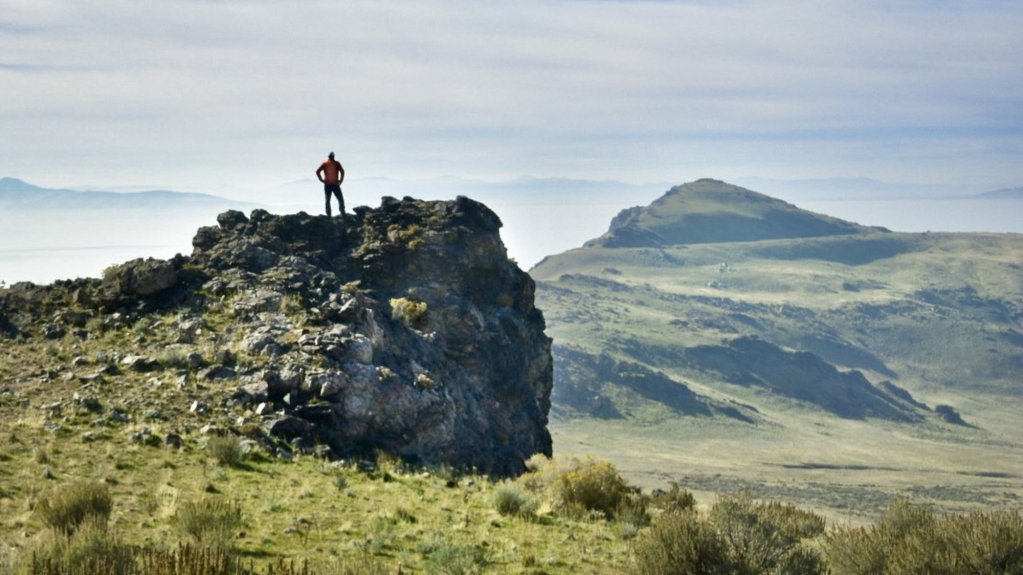
Goose Island on St. Mary’s Lake – Glacier National ParkPeshtigo Reef Light in a StormHooded Crow of IstanbulBison of Antelope Island, Great Salt Lake, UtahLone Oak in Cornfield, Northwest Wisconsin La Antigua, Guatemala
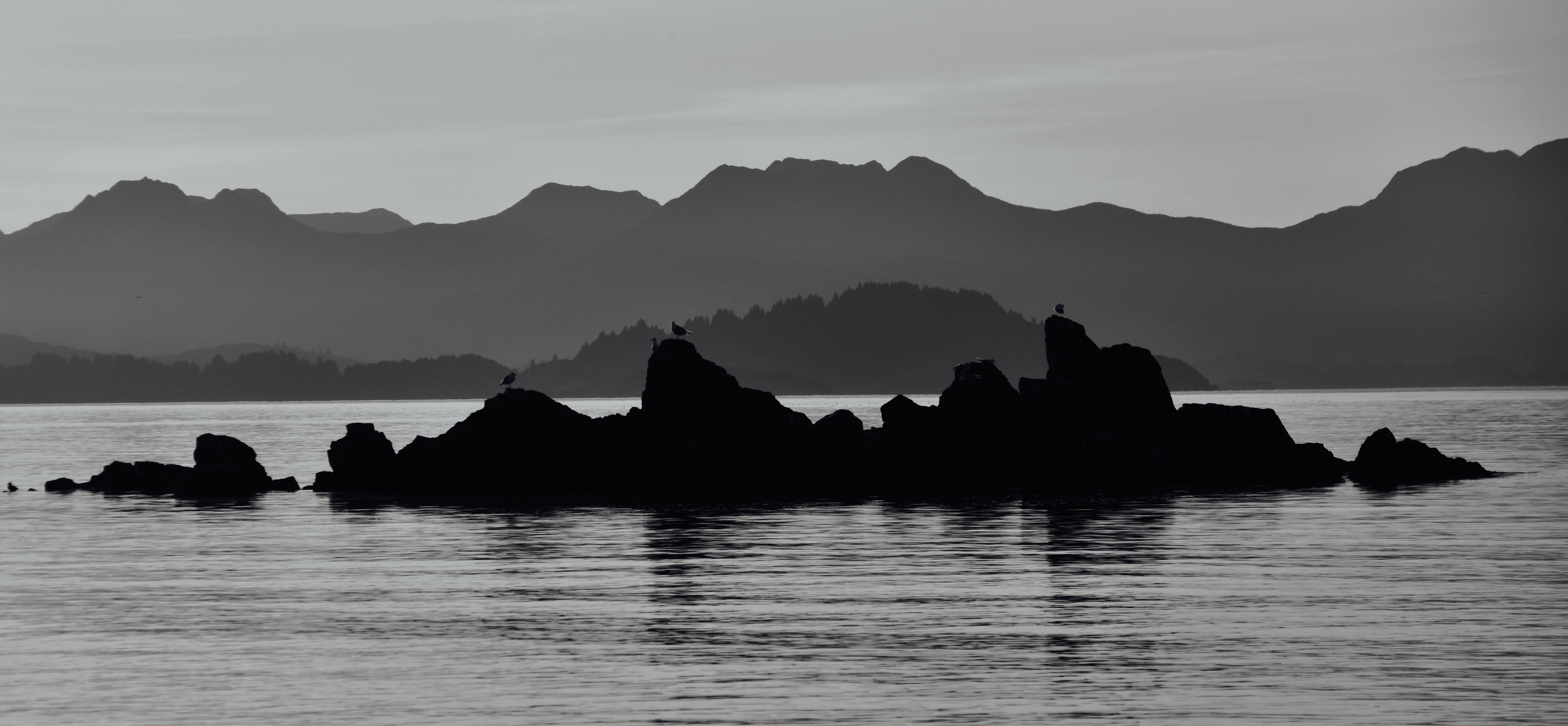
A few years ago, I went on a fly fishing trip to Kodiak Island, Alaska. We aimed to catch Coho and King Salmon on a fly. They were making their way up the freshwater streams to spawn. We had a great time catching many different species of fish and getting to know the local Kodiak Bears. I also enjoyed catching some beautiful landscape images along the way. Here is one example along with a discussion about composition and editing.
This image holds three natural elements: sky, rocks, and water. In this format, the elements are identified by their form and color value: lights, grays, and darks. We can see the elements in this image because natural light is present. It reflects to our retinas. The different values are a result of the physical nature of the elements: gas, liquid, and solid. Distance from the camera lens also plays a part. The farther the object is from the lens, the more atmosphere between them. This causes distant objects to be lighter in value. This is the basic natural science involved in this image.
The human contribution that creates art from the scene
First, it’s the placing of oneself in such a beautiful place on our planet. Second, is the willingness to hump camera gear along with all of the accouterments associated with fly fishing into a very remote area. Third, is noticing compositions like this when it presents itself. And fourth, is deciding how the composition will be presented to the viewers
Composition and Editing
The lightest part of the image is the beautiful horizontal line where the water meets the distant shore. I wanted to position that line near the horizontal center of the frame to achieve balance and interest.
The darkest darks and the lightest lights are where that horizontal line interacts with the rocks in the foreground. It’s powerful to be near the center of this image.
The vertical, dark reflections of the closest rocks are striking. They create a beautiful pattern with the horizontal streaks of waves in the foreground. This area is more interesting than the near monochromatic sky, so I gave this area more space in the image. It also helps lead the viewers’ eyes into the scene. The lost edges where the foreground rocks and waterline meet adds to the visual interest of the image.
The farthest hill carries some weight in the image. However, it does not carry as much weight as the formations in front of it. I cropped the image keeping all of this in mind to create an image that feels balanced.
The subtle cherries on top are the silhouettes of gulls perched on the three highest points of the foreground rocks.
What do you think about this image and its composition? Do you have the same fascination will gulls as I do? Share your opinion in the comment section below. Thanks!
Another Photo-worthy Landscape
Mother Nature is the artist of this colorful seascape on the shores of Kodiak Island, Alaska.
This is another post for the 5-Mile Radius Category. This image was taken only about 1.5 miles from my home. A trickle of a waterway exits the main lake and disappears into a large marshland. In summer, one can stand in this same spot. You can capture countless wildlife images. Winter photography composition challenges, however, are as different as the landscapes are picturesque.
Winter in northwest Wisconsin is something altogether different. Gloomy days make dull white and gray the color palette of the season. Finding something interesting to photograph is challenging – but not impossible.
Adapting to winter conditions as a photographer
The Scandinavian folks have a saying, “There is no such thing as bad weather, only a bad choice of clothing.” This idea certainly holds true for venturing outdoors during a Wisconsin winter. It can also serve as a useful metaphor for winter photography composition. The winter photographer must choose a different shooting plan. Zoom in and look for the little surprises the season has to offer. Or the opposite, by using a wide angle lens to capture an ethereal landscape veiled by fog or snow.
In a landscape where straw-colored cattails stood scrambled by the harsh winter wind. The view extended as far as I could see through my mid-range lens. By narrowing my focus, I found this composition that expresses the essence of cattails in winter. Their reflection in water mirroring the color of the sky framed by encroaching ice creates a simple yet effective composition. The muted colors of the cattails and reflected ski complement each other in a soft, satisfying way.