Pipestone National Monument is located in southwest Minnesota, approximately 30 miles north of busy Interstate 90. I was fortunate to discover this fantastic little gem on a rural-focused route to Custer State Park in South Dakota.

Designated in 1937. Pipestone National Monument is a site of important cultural, historical, and geological significance. It consists of almost 300 acres. Its terrain includes rolling tallgrass prairie, glacial deposits, Sioux quartzite outcroppings, and the sacred pipestone (Catlinite) veins layered beneath the quartzite.

The Prairie

The tallgrass prairie on this property is one of the remaining fragments of an ecosystem that once covered the vast open lands of our country. There are segments of prairie here that are original and native, with little change since prehistoric times. Other areas were recovered from agricultural plowing and restored to prairie. It is amazing to stand in this park and look out over a tallgrass prairie and experience what it was like centuries ago.
Geology of Pipestone National Monument
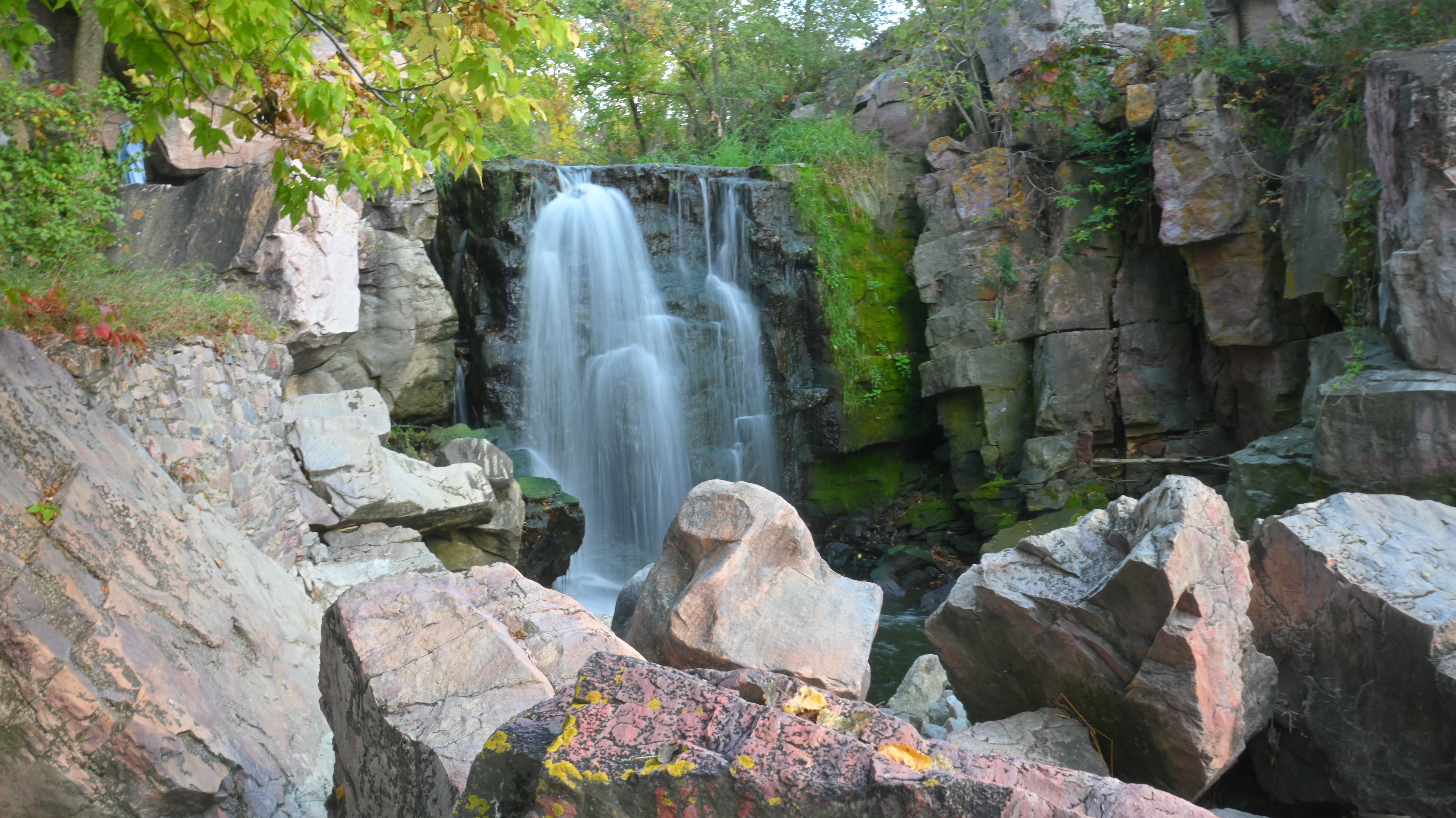
Pipestone creek, a small tributary that runs through the monument, is responsible for eroding channels in the quartzite bedrock over thousands of years. The erosion eventually revealed a thin layer of metamorphosed red clay that lies between the quartzite. Pipestone creek is very picturesque and provides great opportunities for photography.


The Rocks
On the surface of the tallgrass prairie, glacial erratics are scattered about. Sioux quartzite (the second hardest rock on earth) shows itself in outcroppings and partially buried boulders. This is the bedrock of the area and is nearly 1.7 billions years old. Dozens of feet below the quartzite are the thin pipestone veins, sandwiched between massive quartzite beds.

What exactly is Pipestone?
Pipestone (also known as catlinite) is a reddish metamorphosed claystone found only in Pipestone National Monument. Its clay silt origin makes it relatively soft which means it can be worked with hand tools. The softness combined with great durability after being carved, makes it ideal for shaping into pipes and ceremonial objects.
For centuries, Native American tribes have quarried pipestone by hand to create ceremonial pipes. The smoke from these pipes is believed to carry offerings to the Creator. Because of this deep meaning, the stone is regarded as a sacred gift and not just a raw material by Native peoples.

Quarrying for Pipestone
Tribes from across North America journeyed to the area now in the National Monument, including the Dakota, Lakota, Ojibwa, and others. The quarrying grounds were considered neutral territory where fighting was forbidden. Warriors had to lay their weapons down before entering the sacred grounds.
This tradition continues today. The monument still allows quarrying by Native Americans who can trace their tribal affiliations. A permit is passed down through generations (much like Green Bay Packer tickets!) and families may spend their lives slowly working through layers of quartzite to reach a vein of pipestone below.

.

Special treat for geology nerds!

These wave-like patterns in a rock along the trail at Pipestone National Monument are ripple marks; evidence of a shallow sea covering the area nearly 1.6 billion years ago. Over time, its sands became hard Sioux quartzite, and its clays transformed into the soft red pipestone. A small detail in a rock along the walking path, but a big clue to the geological processes that are responsible for the origin of Pipestone.




This blog is a place for stories and conversations. Add your voice below – I'd love to hear it.