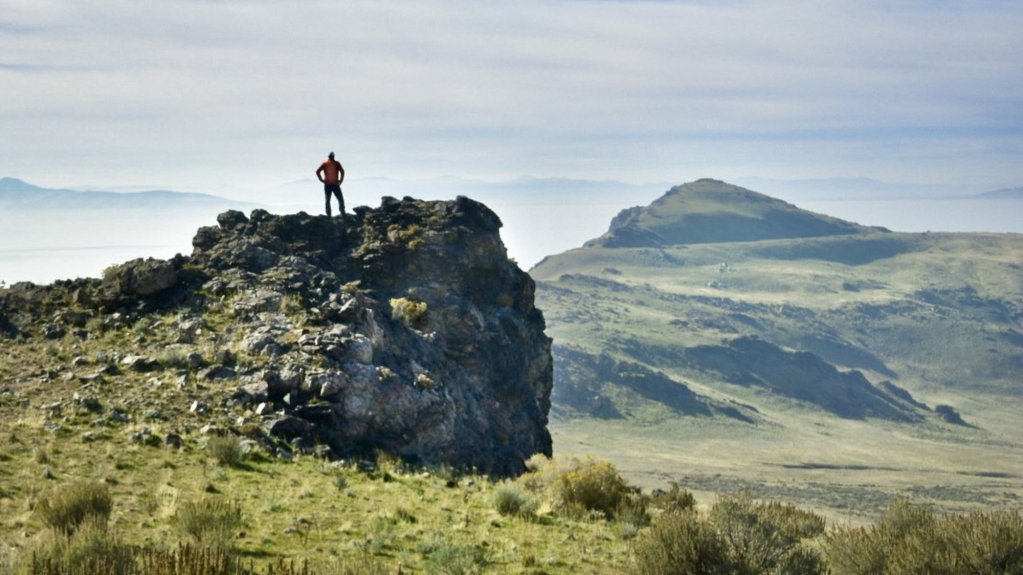
The author taking in the vista on Antelope Island, Great Salt Lake

Tag: Travels

  • Pipestone National Monument

    Pipestone National Monument

    Pipestone National Monument is located in southwest Minnesota, approximately 30 miles north of busy Interstate 90. I was fortunate to discover this fantastic little gem on a rural-focused route to Custer State Park in South Dakota.

    Pipestone National Monument Visitor Center
    Pipestone National Monument Visitor Center

    Designated in 1937. Pipestone National Monument is a site of important cultural, historical, and geological significance. It consists of almost 300 acres. Its terrain includes rolling tallgrass prairie, glacial deposits, Sioux quartzite outcroppings, and the sacred pipestone (Catlinite) veins layered beneath the quartzite.

    A Sioux Quartzite boulder stands out on the tallgrass prairie
    A Sioux Quartzite boulder stands out on the tallgrass prairie – a hint of what lies below

    The Prairie

    The tallgrass prairie stretches across Pipestone National Monument, where tribes once gathered in peace to quarry the sacred red stone.
    The tallgrass prairie stretches across Pipestone National Monument, restored and managed to be just like it was back to pre- European settlers.

    The tallgrass prairie on this property is one of the remaining fragments of an ecosystem that once covered the vast open lands of our country. There are segments of prairie here that are original and native, with little change since prehistoric times. Other areas were recovered from agricultural plowing and restored to prairie. It is amazing to stand in this park and look out over a tallgrass prairie and experience what it was like centuries ago.

    Geology of Pipestone National Monument

    Pipestone creek, a small tributary that runs through the monument, is responsible for eroding channels in the quartzite bedrock over thousands of years. The erosion eventually revealed a thin layer of metamorphosed red clay that lies between the quartzite. Pipestone creek is very picturesque and provides great opportunities for photography.

    Pipestone creek flows melodically through the prairies of Pipestone National Monument
    Pipestone creek flows melodically through the prairies of the park
    Pipestone creeks meanders through tallgrass prairie, exposing Sioux Quartzite boulders
    The creek meanders through tallgrass prairie, exposing Sioux Quartzite boulders.
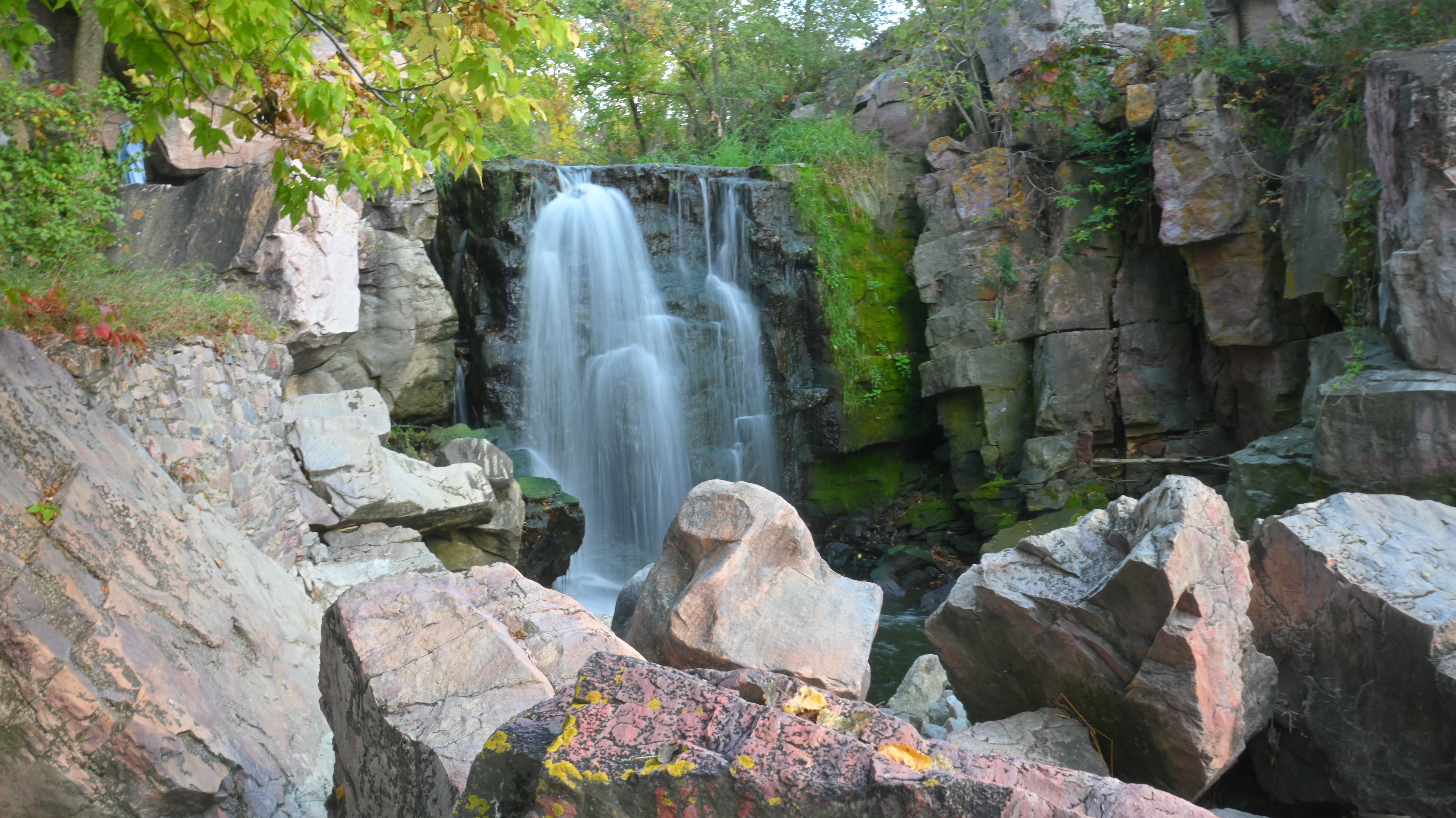
    Winnewissa Falls, flowing over ancient Sioux Quartzite, has long been a spiritual landmark and a place of offering.
    Winnewissa Falls – where Pipestone creek flows over ancient Sioux Quartzite, gives a spiritual voice to this sacred landmark of the Native peoples.

    The Rocks

    On the surface of the tallgrass prairie, glacial erratics are scattered about. Sioux quartzite (the second hardest rock on earth) shows itself in outcroppings and partially buried boulders. This is the bedrock of the area and is nearly 1.7 billions years old. Dozens of feet below the quartzite are the thin pipestone veins, sandwiched between massive quartzite beds.

    Exposed Sioux quartzite with thin layers of red pipestone, revealed by centuries of erosion from Pipestone Creek
    Exposed Sioux quartzite with thin layers of red pipestone, revealed by centuries of erosion from Pipestone Creek

    What exactly is Pipestone?

    Pipestone (also known as catlinite) is a reddish metamorphosed claystone found only in Pipestone National Monument. Its clay silt origin makes it relatively soft which means it can be worked with hand tools. The softness combined with great durability after being carved, makes it ideal for shaping into pipes and ceremonial objects.

    For centuries, Native American tribes have quarried pipestone by hand to create ceremonial pipes. The smoke from these pipes is believed to carry offerings to the Creator. Because of this deep meaning, the stone is regarded as a sacred gift and not just a raw material by Native peoples.

    A ceremonial pipe being carved from pipestone
    A ceremonial pipe being carved from pipestone. Public image from Wikimedia.

    Quarrying for Pipestone

    Tribes from across North America journeyed to the area now in the National Monument, including the Dakota, Lakota, Ojibwa, and others. The quarrying grounds were considered neutral territory where fighting was forbidden. Warriors had to lay their weapons down before entering the sacred grounds.

    This tradition continues today. The monument still allows quarrying by Native Americans who can trace their tribal affiliations. A permit is passed down through generations (much like Green Bay Packer tickets!) and families may spend their lives slowly working through layers of quartzite to reach a vein of pipestone below.

    Hand-hewn quarries where Native families still mine pipestone today. The work is done entirely by hand, without machines.
    Hand-hewn quarries where Native families still mine pipestone today. The work is done entirely by hand, no machines are permitted.
    .
    Prayer cloths tied to trees flutter in the breeze, carrying prayers much like the smoke of the ceremonial pipe.
    Prayer cloths tied to trees flutter in the breeze, carrying prayers much like the smoke of the ceremonial pipe.

    Special treat for geology nerds!

    Wave-like patterns on ancient stone in Pipestone National Monument

    These wave-like patterns in a rock along the trail at Pipestone National Monument are ripple marks; evidence of a shallow sea covering the area nearly 1.6 billion years ago. Over time, its sands became hard Sioux quartzite, and its clays transformed into the soft red pipestone. A small detail in a rock along the walking path, but a big clue to the geological processes that are responsible for the origin of Pipestone.

  • The Biltmore Estate

    The Biltmore Estate

    Through the Lens of my Ricoh GR IIIx: A Day at the Biltmore Estate

    Stepping onto the grounds of the Biltmore Estate in Asheville, North Carolina, feels like opening the doors to a time machine and entering another world. Here, time melts away and history lingers in every stone, every garden path and thoughtfully designed mountain views.

    Built by George Washington Vanderbilt II in the late 1800s, The Biltmore still remains the largest privately owned home in the United States. It spans 175,000 square feet and is surrounded by 8,000 acres of forest, rolling hills, gardens, and vineyards.

    The Biltmore House

    The house itself is awe-inspiring. The French Renaissance chateau, completed in 1895, consists of 250 rooms, including 35 bedrooms and 43 bathrooms. It has 65 fireplaces. Each one is uniquely designed to match the purpose and style of the place. The front facade – seen in the featured image above is one of the most iconic facades in the world.

    The Banquet Hall was a highlight for me. It has a 70ft ceiling and an enormous triple fireplace. Towering chandeliers along with the family crest also define its grandeur.

    The main dining room in the Biltmore house
    The banquet hall in the Biltmore house

    Among the Gardens

    The magnificent estate gardens are just a short stroll down a quiet path from the house. They were designed by the renowned landscape architect, Frederick Law Olmsted. Walking through these gardens is like stepping into a living painting. Jennifer and I wandered among the flowers under umbrellas, absorbing the saturated colors and fragrances, heightened by a summer rain shower.

    The garden cottage and gate are like something out of a dream! – Or a painting.

    The garden cottage and gate on the Biltmore Estate
    The garden cottage and gate on the Biltmore Estate

    The Conservatory

    Providing the backdrop to the beautiful gardens is the Conservatory. Walking through the doors of the Conservatory is an immersive experience. It’s like transitioning from the rolling hills of the Biltmore into a lush, vibrant jungle. Tropical palms stretch towards the skylights while flowering vines and plants from all imagination spill down from dew-soaked wooden beams. The spectrum of colors and textures seem almost surreal. The Ricoh handled the colors and dreamy, soft light beautifully.

    Sweeping views of the Estate

    From terraces on the estate, the views open up to rolling meadows where trees seem placed by a landscape painter. In the distance, the cloud draped Blue Ridge Mountains become a majestic frame. It’s here that you can get a sense of the scale of Vanderbilt’s vision. To blend nature, architecture, and art into one harmonious experience.

    The Inn at Biltmore Estate

    The final landscape photograph is a view from the Inn at Biltmore Estate. The Inn feels like a natural extension of the grounds. It’s elegant and quiet. There are places to rest and reflect. Places to sit still and appreciate the natural beauty that provides the foundation for this truly amazing place. An evening mist lifts from the verdant forests of the Blue Ridge Mountains. Mother Nature sighing a relief after a long day.

    View of the Blue Ridge Mountains from the Inn at the Biltmore Estate

    The View of the Blue Ridge Mountains from the Inn at Biltmore Estate

    An enchanting meal at the Inn

    We concluded this magical day with an inviting dinner at The Dining Room, nestled within the Inn. The Dining Room at The Inn at Biltmore Estate has celebrated a Four-Star rating from Forbes Travel Guide for eight consecutive years through 2025. It consistently receives the Wine Spectator ‘award of Excellence. The menu reflects a “field-to-table” philosophy with much of the food coming from the estate itself. The dishes can be paired with wines from the Biltmore’s own vineyard.

    Out of respect for the decorum of peacefulness and privacy at the Dining Room, I refrained from taking photos. I wanted to maintain the ambiance of our dining experience. However, the view from our table was the same as the above image.

    Photographing the Biltmore Estate with the Ricoh Gr IIIx

    The Ricoh GR cameras are often described as street photography cameras. However, they certainly shouldn’t be pigeonholed. For me, it has become a great travel companion. Its compact size makes it ideal for places like Biltmore where large cameras and bulky lenses are discouraged. The exceptional image quality and color rendering are impressive. Being able to shoot high quality images quickly and quietly without drawing attention made the experience more immersive for me. I could focus on seeing and instead of managing gear.

    The Biltmore Estate is much more than its iconic facade and enormous size. It’s an invitation to wander and linger. Experience history and architecture. Enjoy art and nature in all their beauty in one extraordinary place.

    Site Icon

    Go Further

    For more information on The Biltmore Estate, Check out their excellent website HERE.

    For more information on Ricoh Cameras, click HERE.


  • Portrait of Boy Selling Onions

    Portrait of Boy Selling Onions

    A Celebration

    This portrait of a boy selling onions is one of my favorite images of all time. I ponder over it whenever I come across it. I’m posting it today as a celebration of the success of my website.

    So far, in 27 posts, Gary Donaldson Photography + has surpassed 2,100 views from 760 visitors!

    Thank you very much for the support! I promise to continue posting high quality, interesting images and articles.

    The Portrait

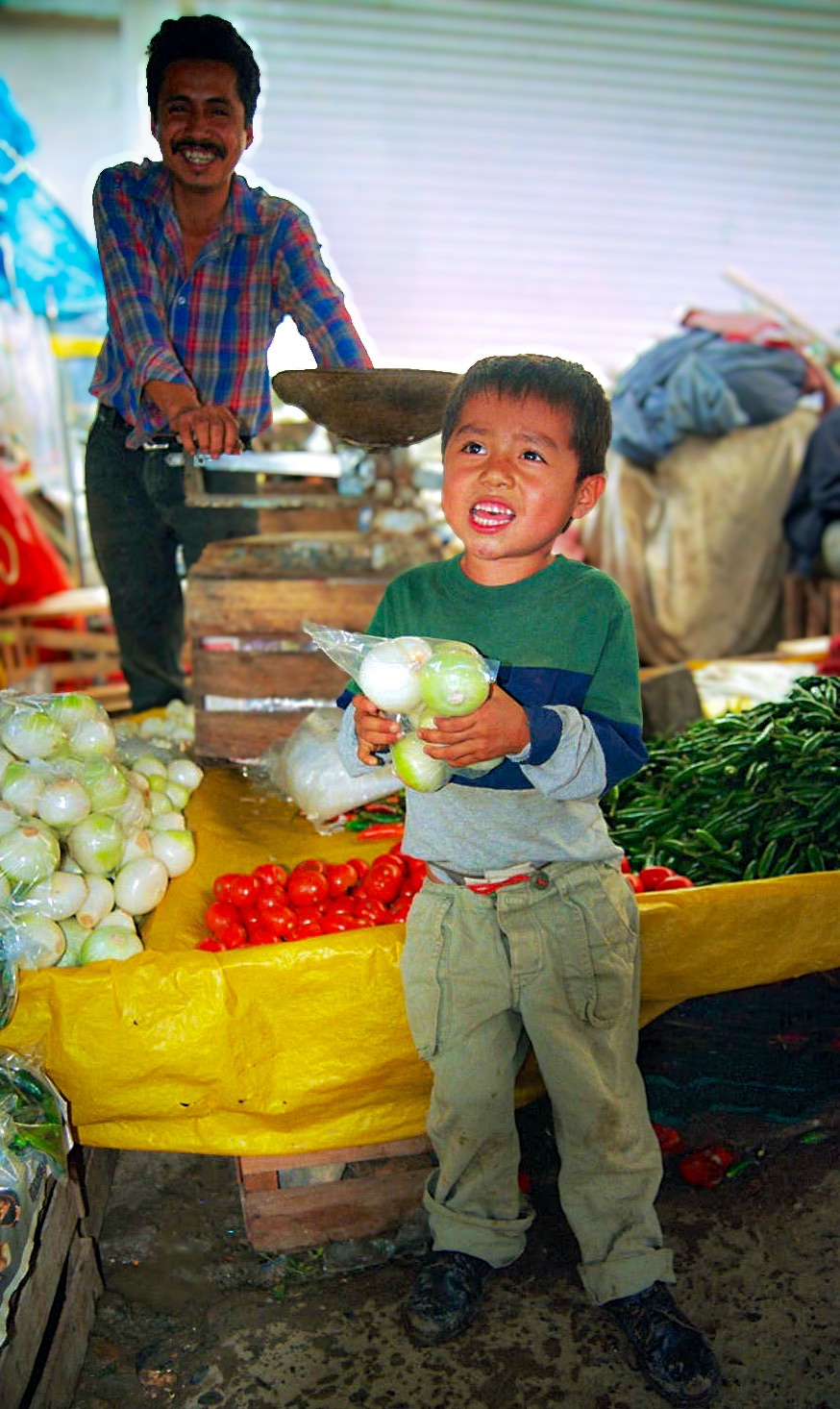
    The image of a boy selling onions was taken on one of my many trips to Mexico. While walking through a local market, I came upon this little guy hawking onions at his dad’s vegetable stand. The urge to capture this image was sudden and strong. I wasn’t sure at the time why, but I had to capture the moment.

    I can still hear his sweet little voice, “Cebollas! Por favor, compre mis Cebollas!” (Onions, Please buy my onions!). He was sincere and compelling.

    A Boy Selling Onions

    I look at this photo, now 19 years later (Tuxpan, Mexico, 2006), and wonder why it is so moving to me.

    What first caught my attention was how sincere and grown up he seemed to be at his task. But what I see now is the joy and connection between a father and his son. The boy is determined, proudly holding a bag of onions from the vegetable stand while his father smiles behind him.

    His clothes tell a deeper story – oversized pants, rolled at the cuffs and slipping off his waist hint of hand-me-downs. His shirt is worn but warm. They probably arrived at the market early when a chill was still in the air. His black leather shoes are scuffed and caked with mud, indicating he’s no stranger to working in the field along side his father in their life of subsistence.

    Precious Moments

    Despite such a humble setting, there is an overwhelming sense of pride, warmth, and contentment here. The father’s proud smile; a boy helping his father at the market; It feels like a glimpse into a loving relationship where even small tasks and gestures are a part of something meaningful, something special.

    An Invitation

    If you enjoyed this post, please consider subscribing to receive More stories and images like it. Thanks!

— Matsuo Bashō